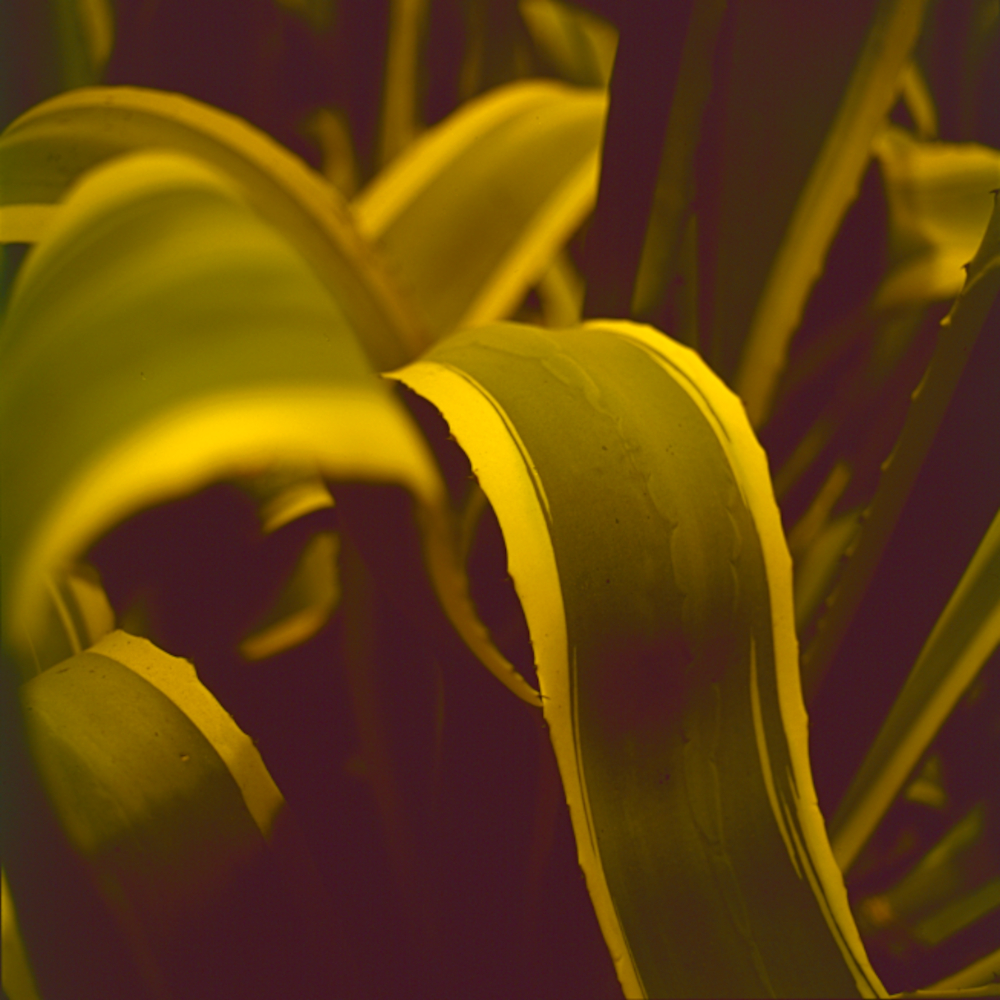
In the Light
Lambda C-print (from a slide), 80x80 cm, 2026
In
recent years, almost all lighting fixtures in public spaces have been
equipped with LED technology. The main advantages of LEDs are their high
light efficiency and greater sustainability. This technology has
primarily replaced sodium vapour lamps, which are known for their
distinctive yellowish light. This type of lighting has now almost
completely disappeared from public spaces. The photographic work ‘In the
Light’ shows a plant in an urban space illuminated by a street lamp by
a sodium vapour street lamp. The image captures a lighting atmosphere
that is still familiar to us, but which is already inherently
anachronistic.
Between Suicide and Travel
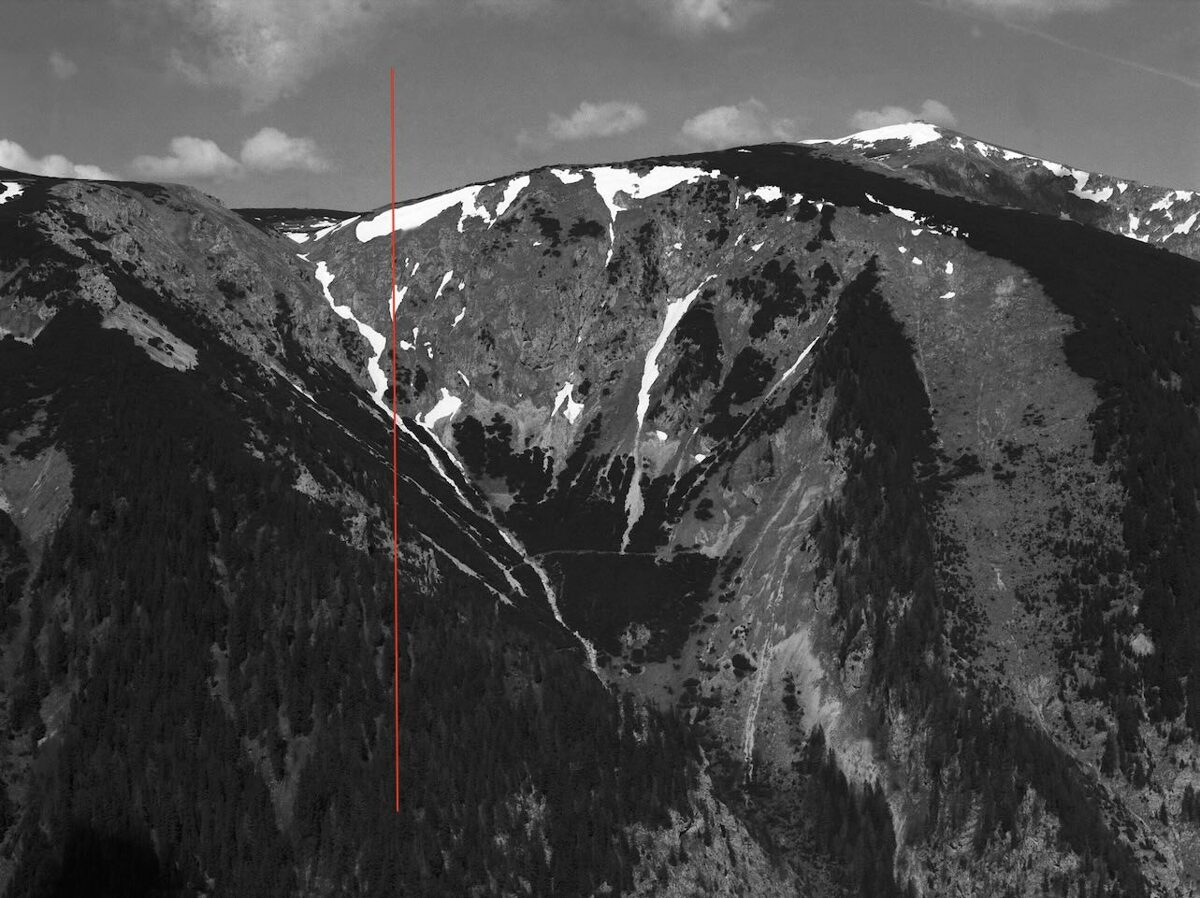
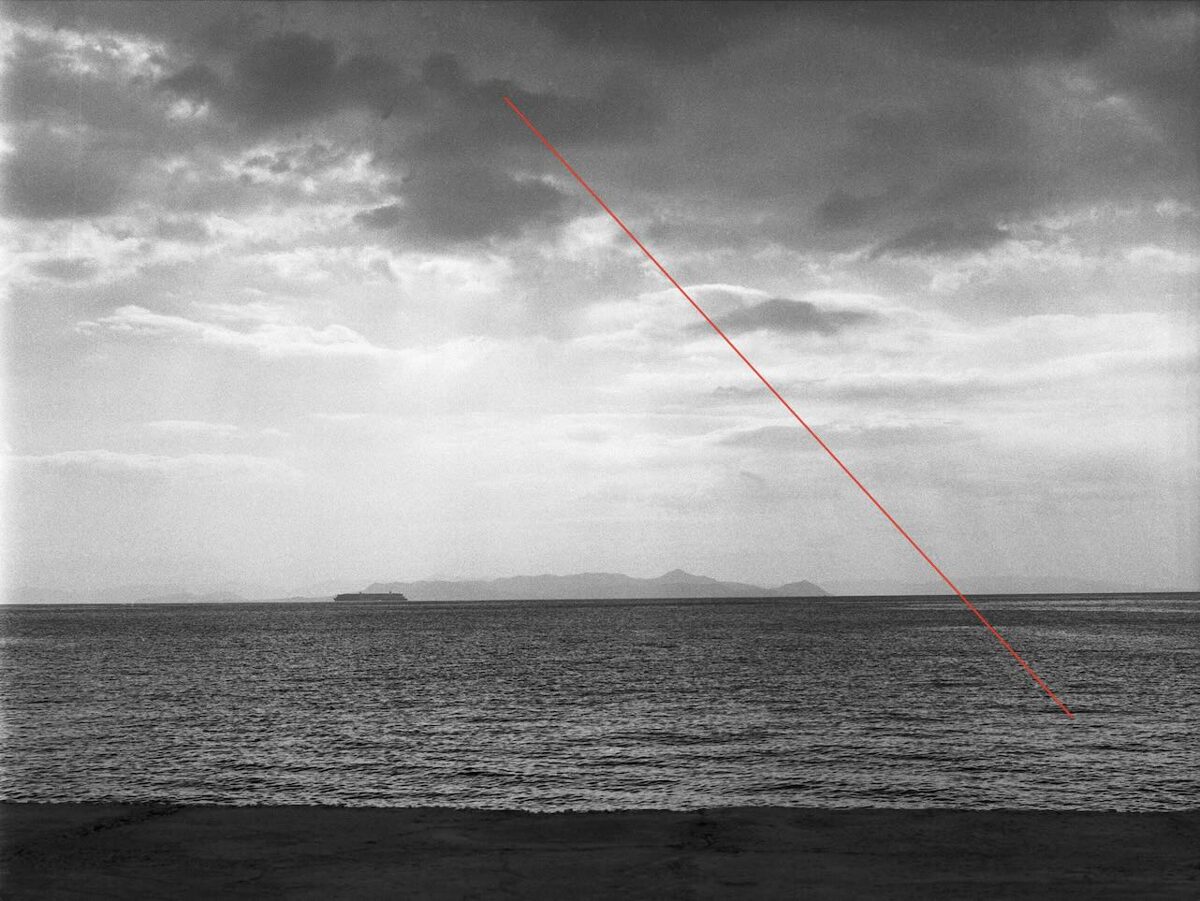
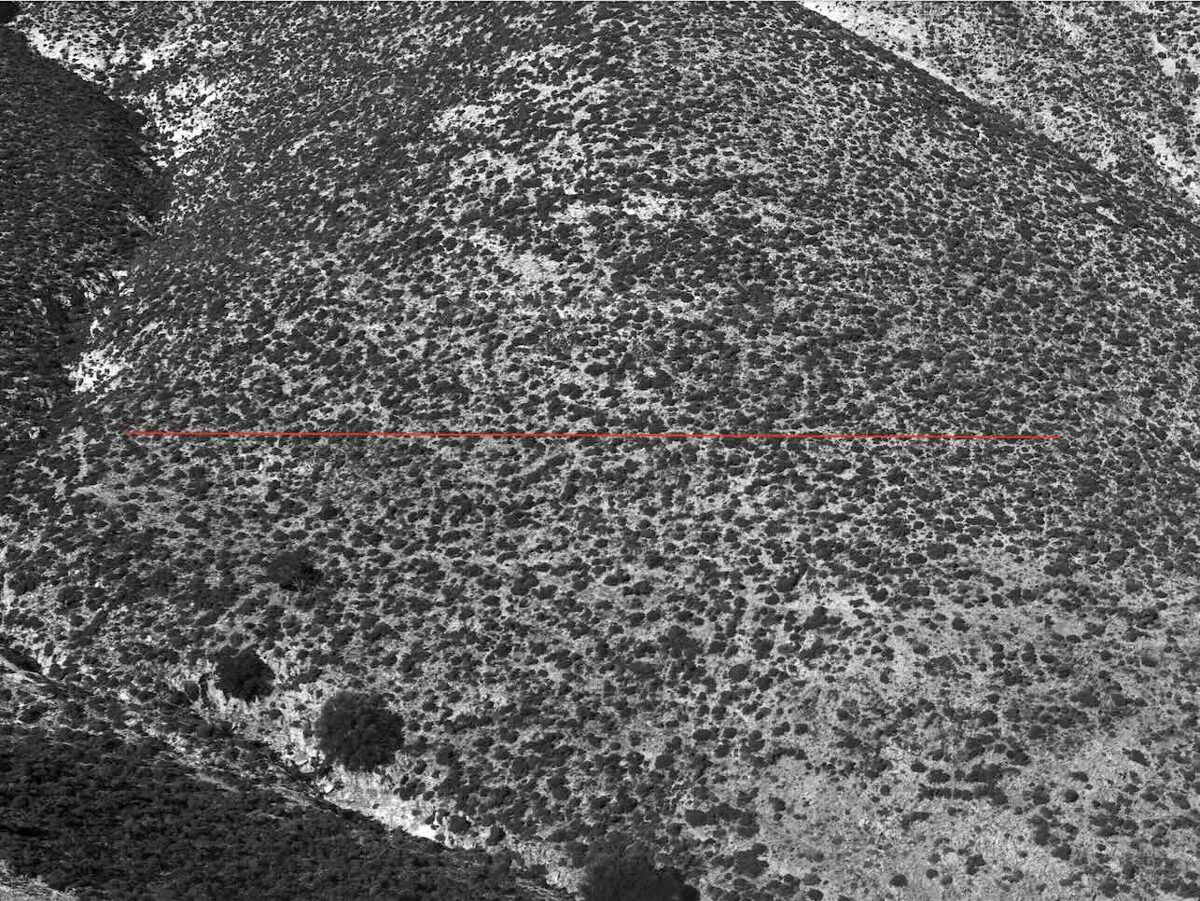
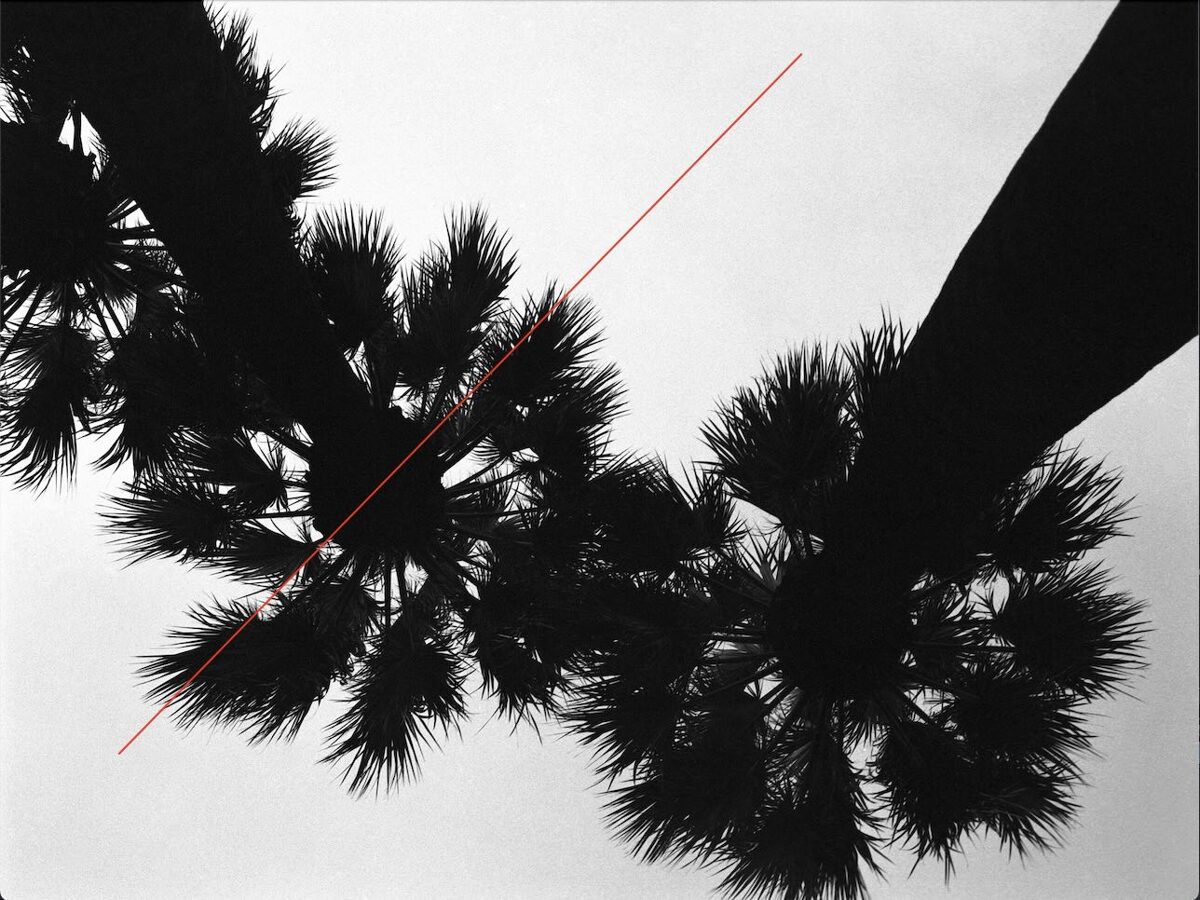
Photo series, 2026, each 60cmx45cm
The photo series ‘Between Suicide and Travel’ borrows its title from a statement by the well-known Italian artist Lucio Fontana, who is best known for his iconic slashed paintings. Fontana said that at one point in his life he had to choose between suicide and travel. He chose the latter. The photo series consists of four medium-format photographs of travel motifs, each of which – in reference to Fontana – is traversed by a red cut. The photo series is available in two versions: one edition in which the lines are digitally superimposed on the images, and another edition with analogue baryta prints in which the lines are drawn by hand with red ink.
Notes on Perception and Fluidity
The group of works Notes on Perception and Fluidity (2025) consists of four works, all of which were created during a residency in Cairo. On the one hand, the photographic and object works revolve around the question of what we perceive as ‘foreign’ and how we position ourselves in relation to it. On the other hand, they deal with the state of fluidity that is always inherent in individual and collective perception. A quote from the early scholastic Hugo of Saint Victor, found in Edward Said's book Orientalism, complements the photographic works created in Cairo. One of the two object works is an artistic examination and postcolonial interrogation of the works of Austrian postcard manufacturer Joseph Max Lichtenstern, who worked in Cairo from 1893 onwards. Here, too, the focus is on a critical reflection of our view of the ‘other’. Another work uses an analogue film reel to explore the fluidity of technical recording devices and can be read in direct relation to the current state of filmmaking in Egypt – in archival, political and economic terms. All of the works critically question our perception, which requires constant reinterpretation and re-evaluation and can never be regarded as a fixed state. This is particularly true with regard to our perception of the ‘other,’ which continuously reflects power relations.
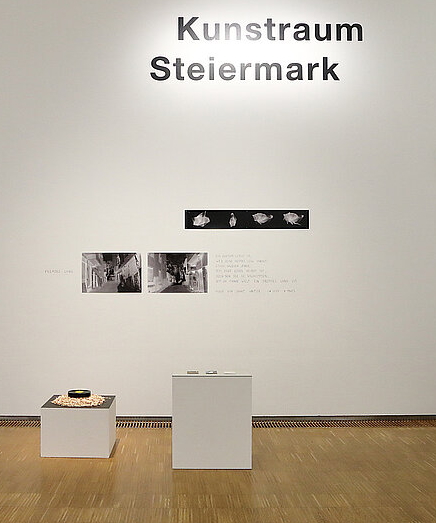 Foto: Universalmuseum Joanneum / N. Lackner
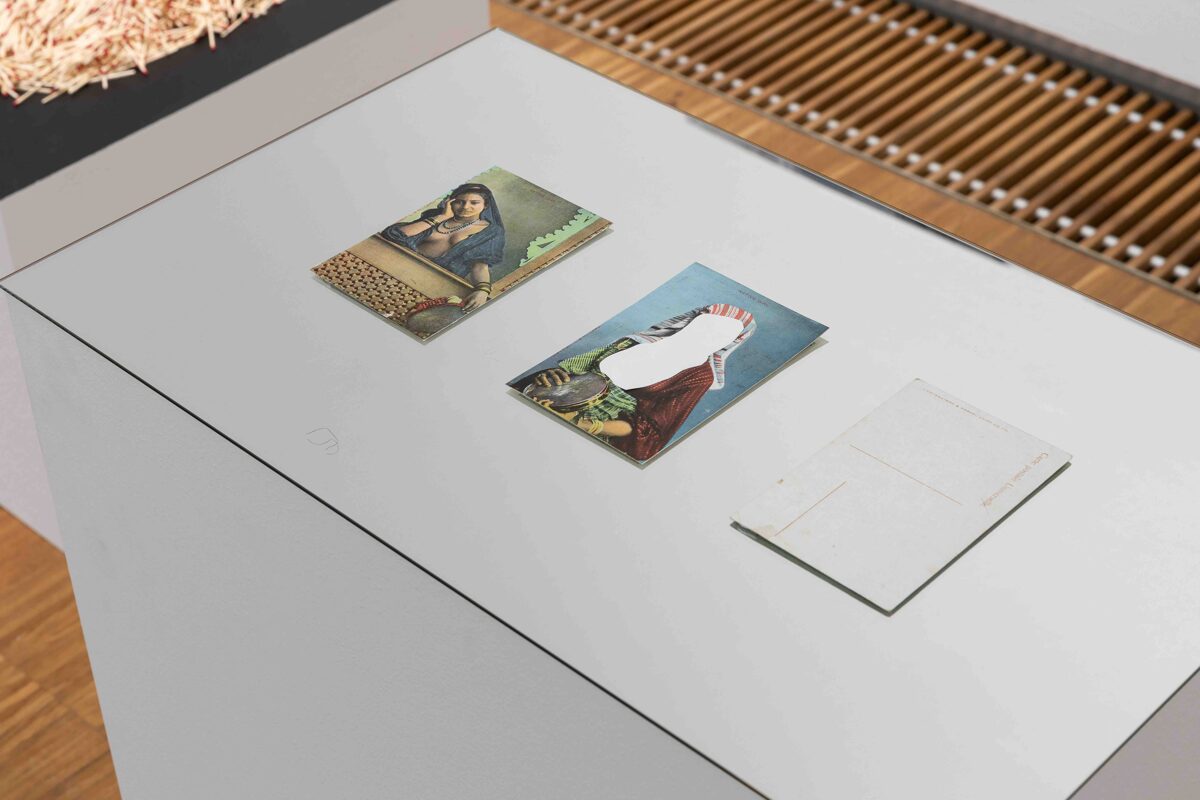 Foto: Universalmuseum Joanneum / N. Lackner
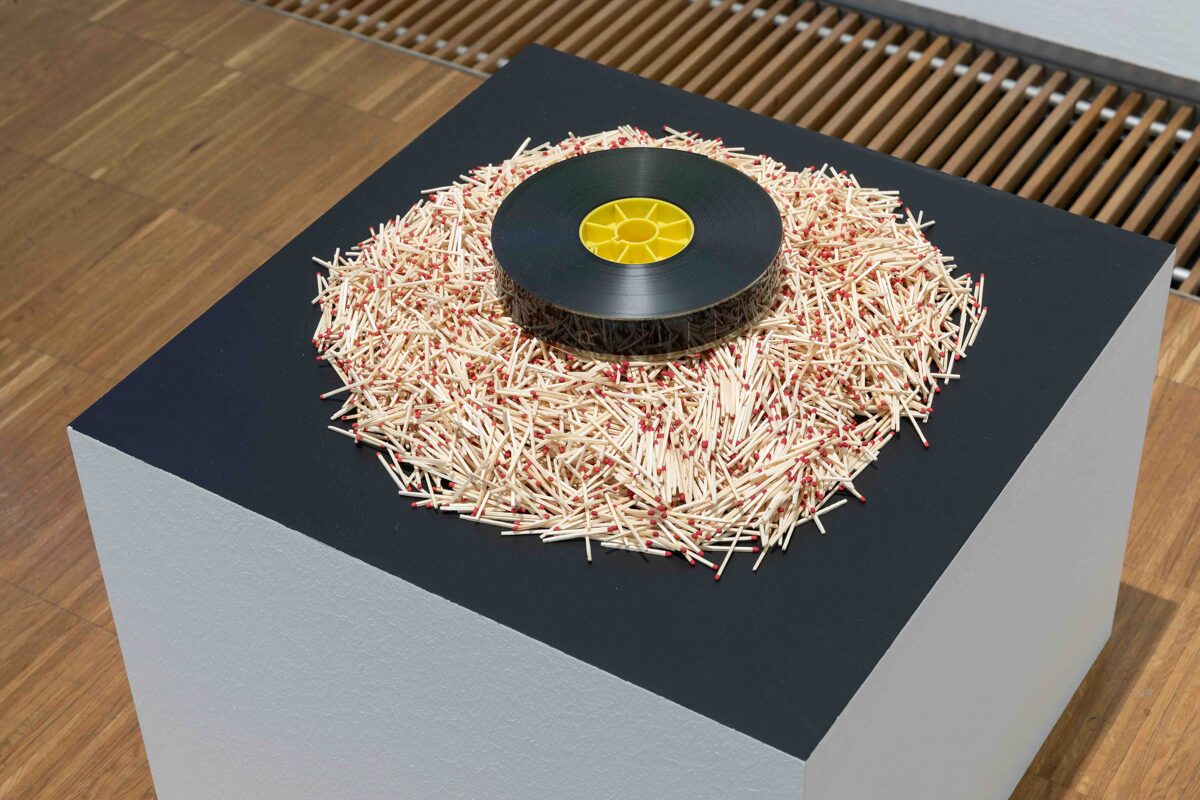 Foto: Universalmuseum Joanneum / N. Lackner
mediterranean sea
Baryt print (2022, 75x100 cm)
Lambda C print (2025, 40x60 cm)
The Mediterranean Sea remains a popular holiday destination and, at the same time, a dangerous escape route for many people. This group of works deals with this ambivalence.
Based on the first verse of a pop song from the 1950s, the film Mittelmeer questions the idealised image of the Mediterranean as a place of longing.
The two photographic works show breakwaters. Their task is, among other things, to prevent the destruction of boats by converting the energy of the waves through dissipation (literally ‘scattering’)
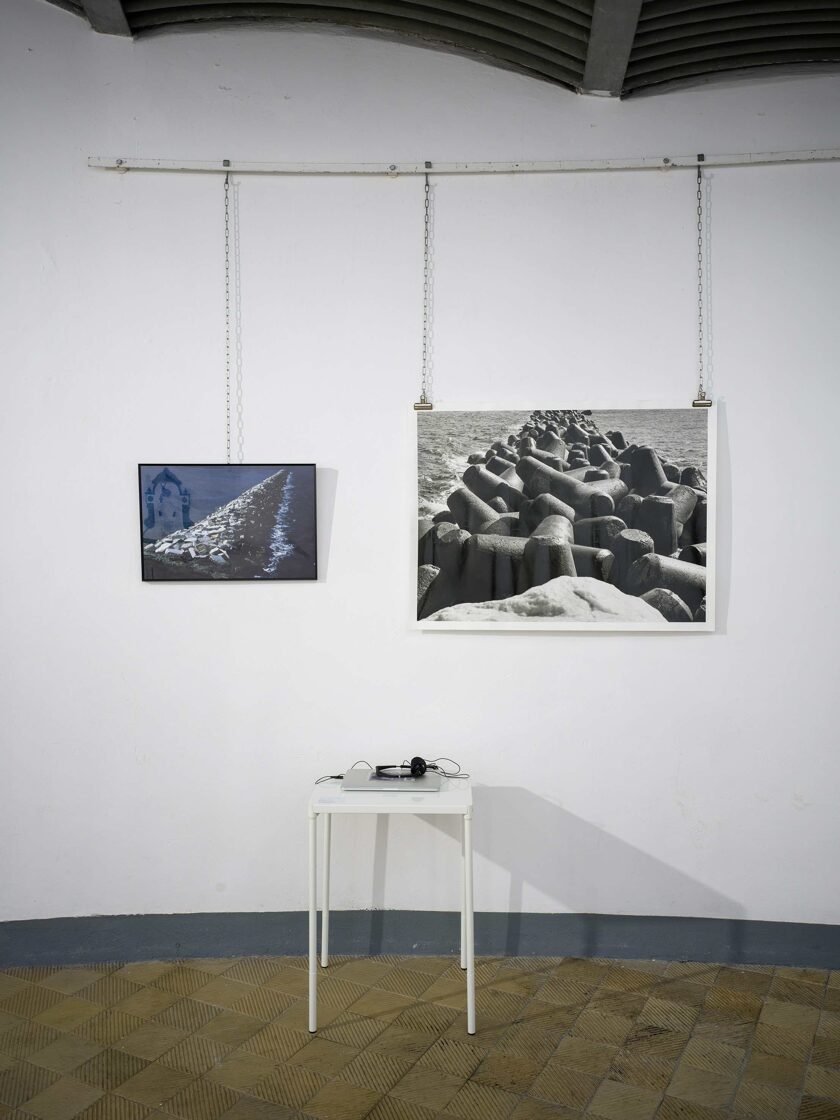 The photograph was taken by Aleksandra Kolodziejczyk at the group exhibition »Currents« at Wasserturm Wien in 2025.
SERIES AND STRUCTURES
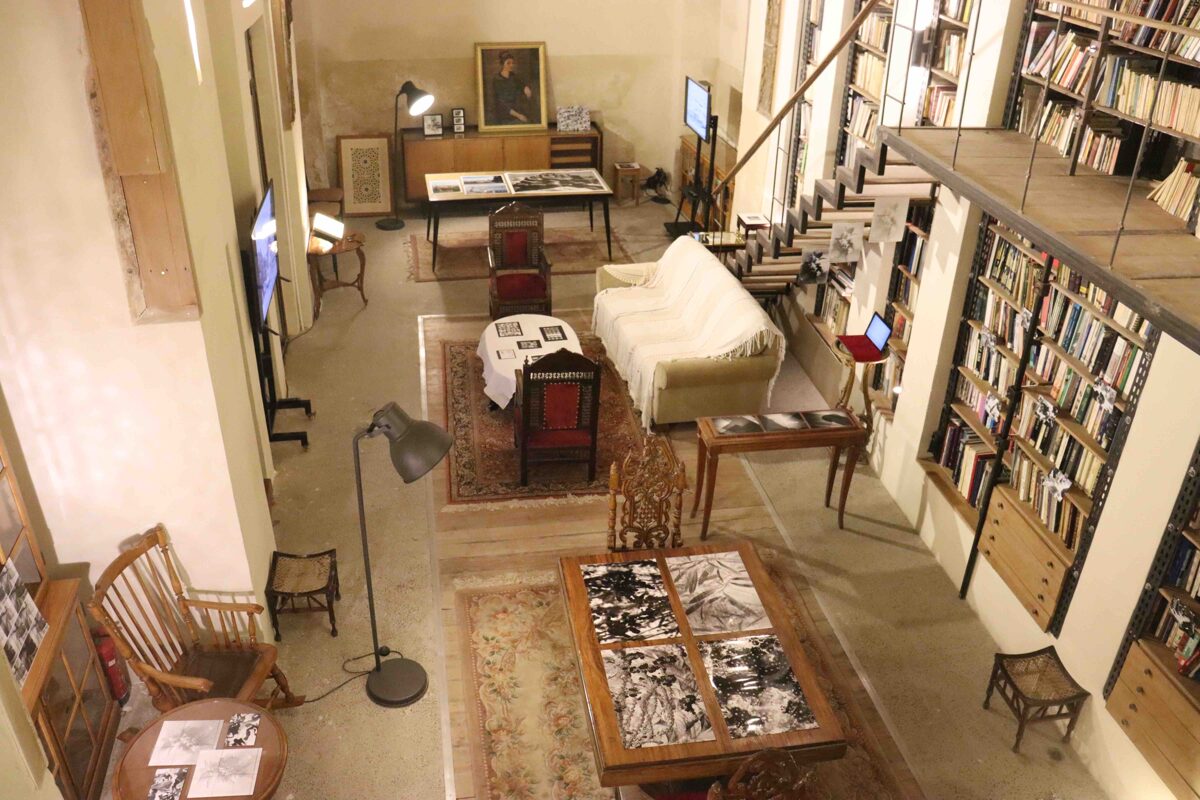
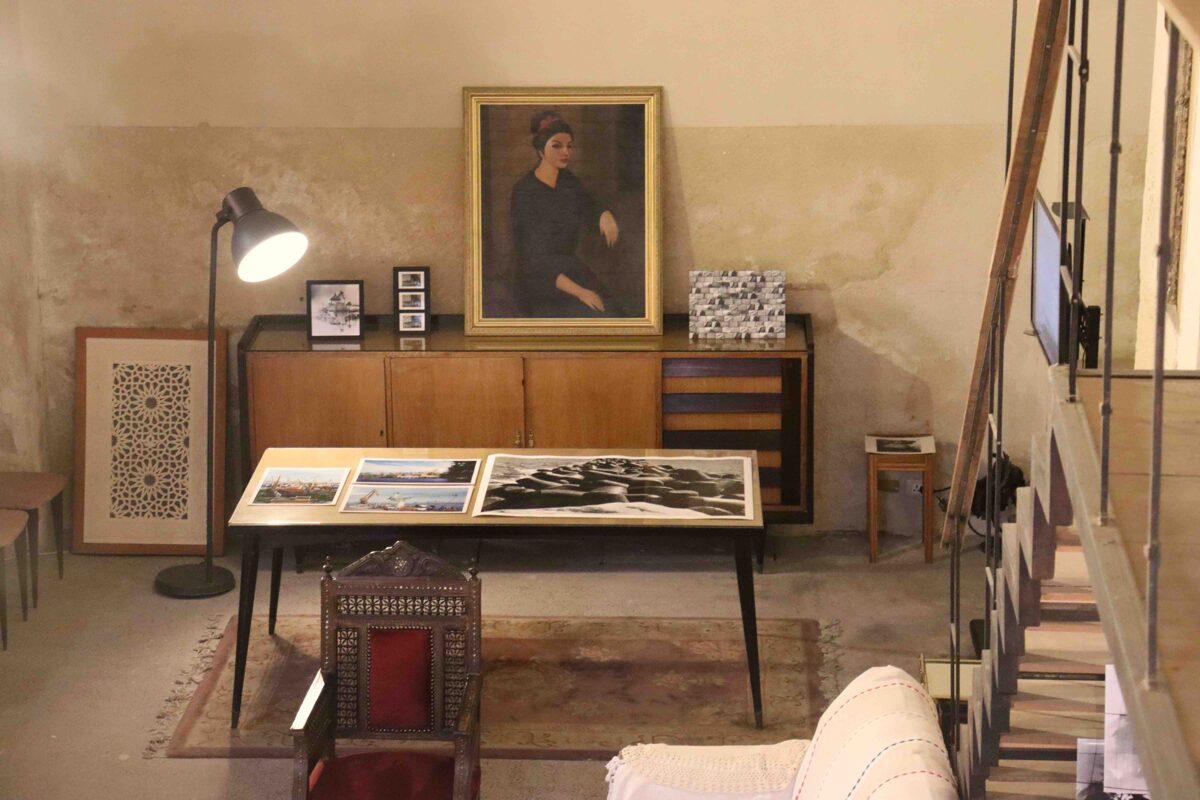
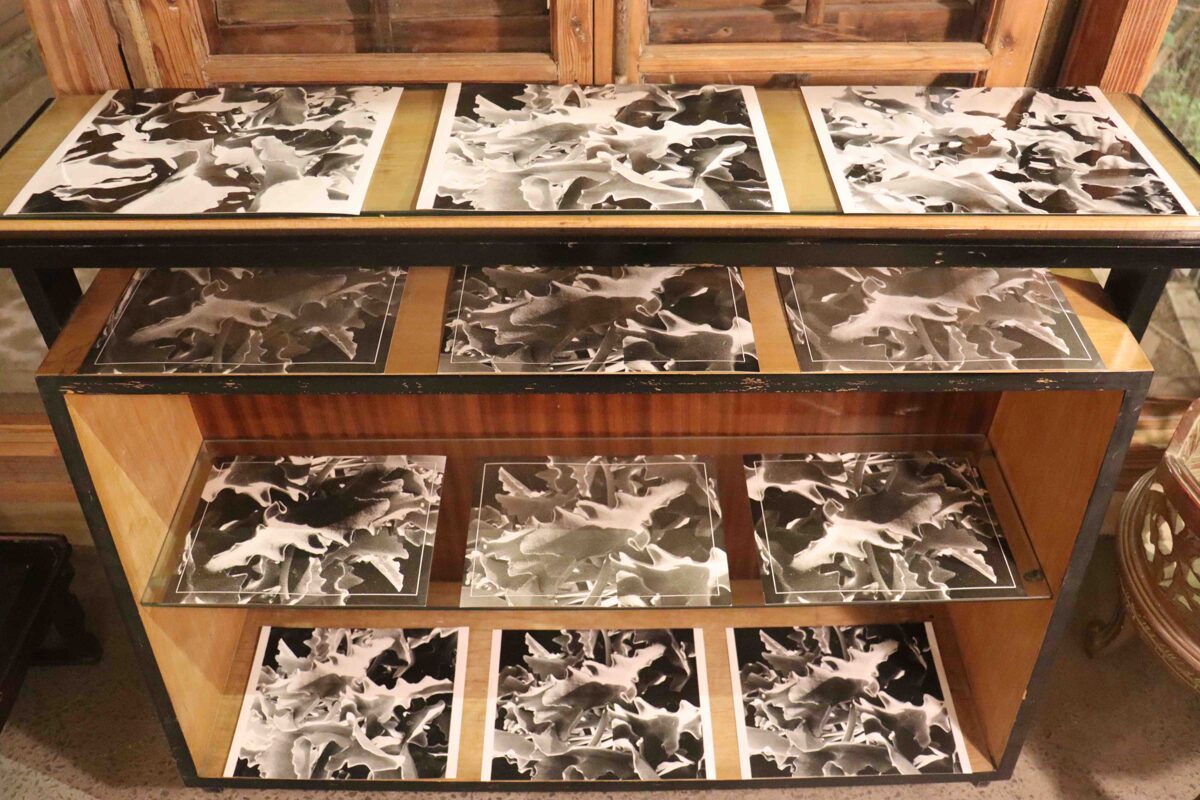
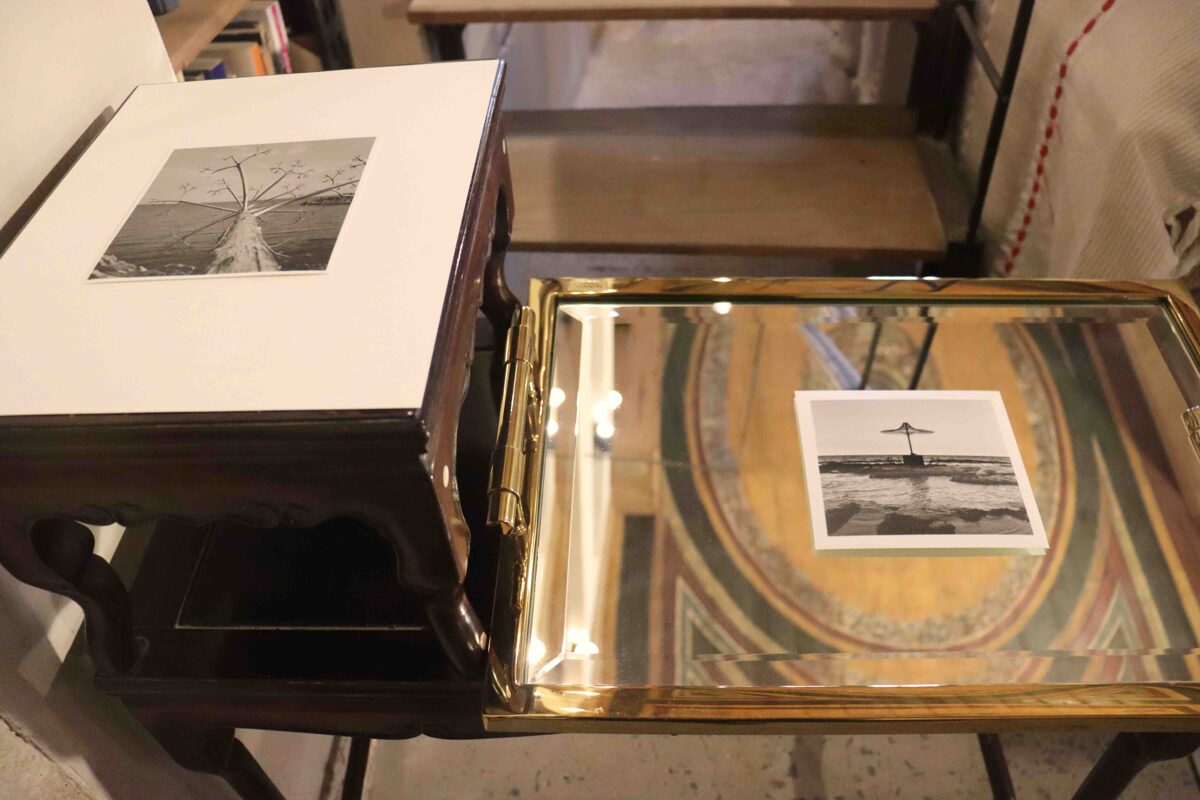
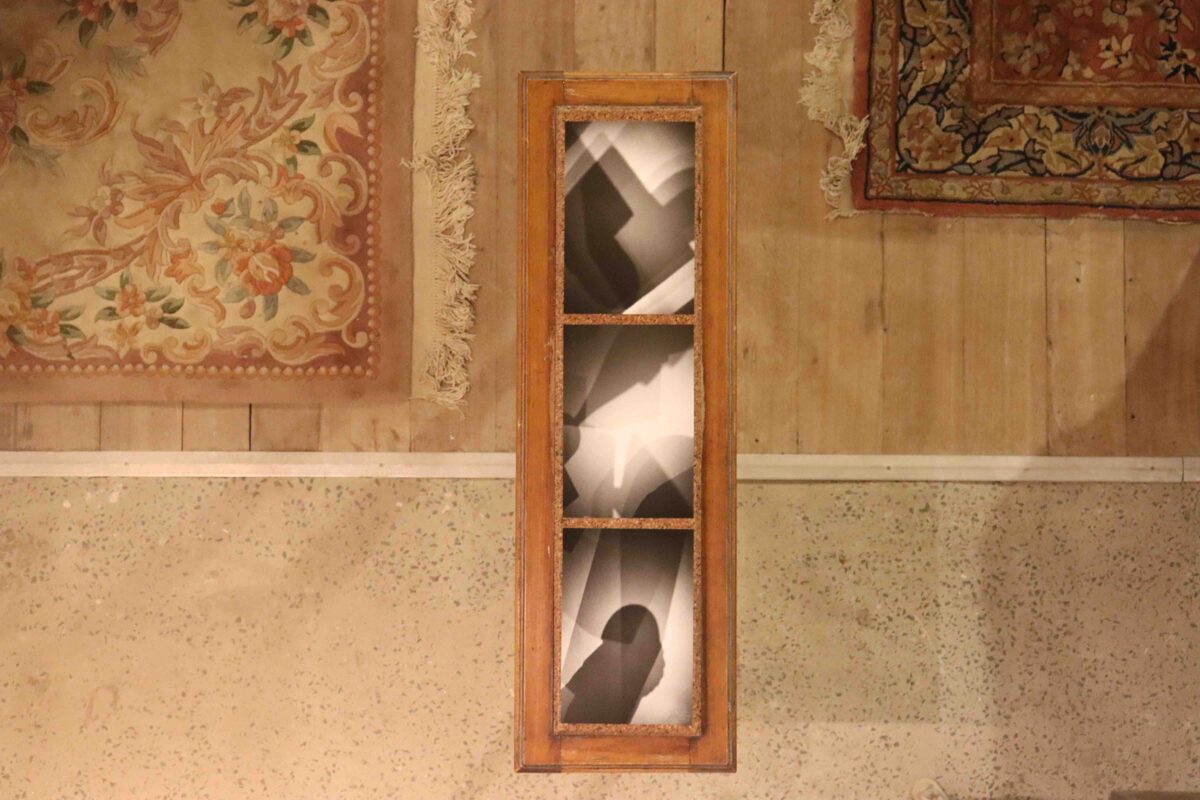
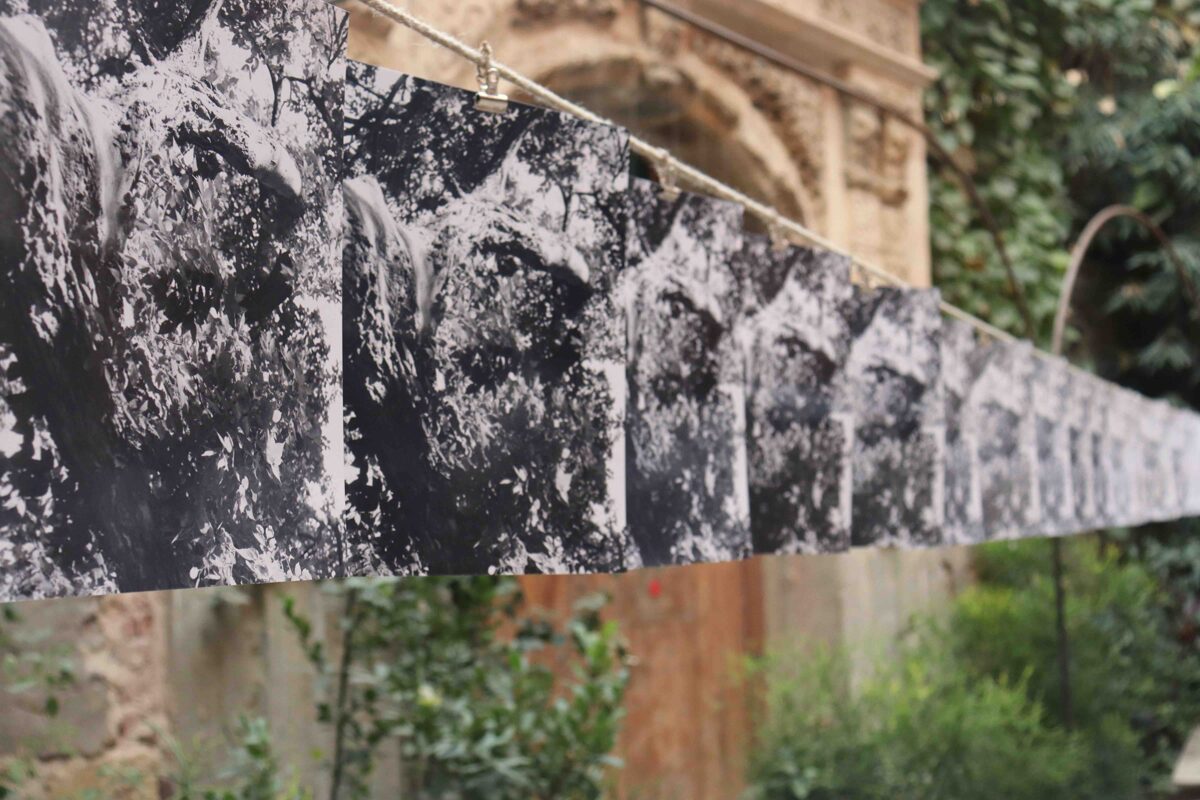
Selection of photographic works in the solo exhibition ‘Series and Structures’ at Bayt Yakan in Cairo/November 2024 (all joint works by Karl Wratschko and Aleksandra Kolodziejczyk)
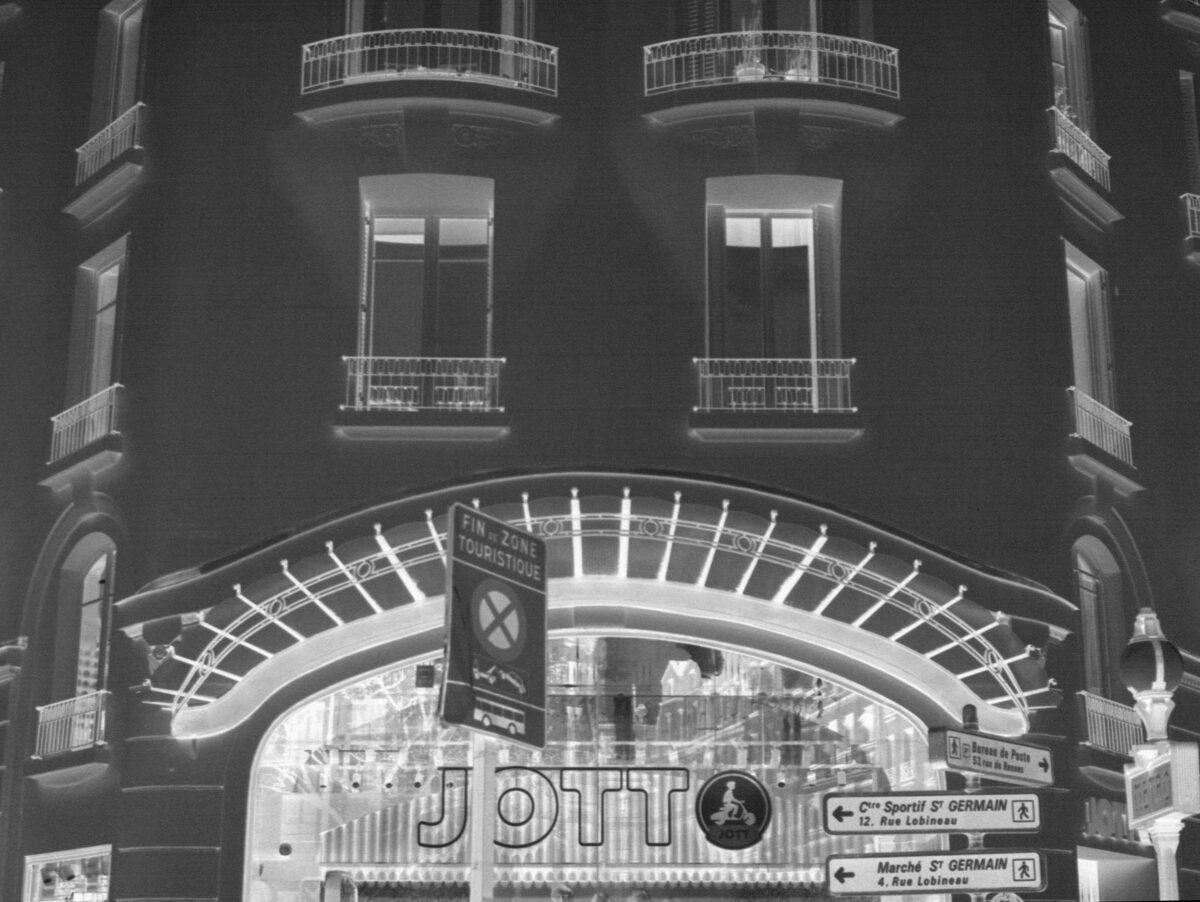
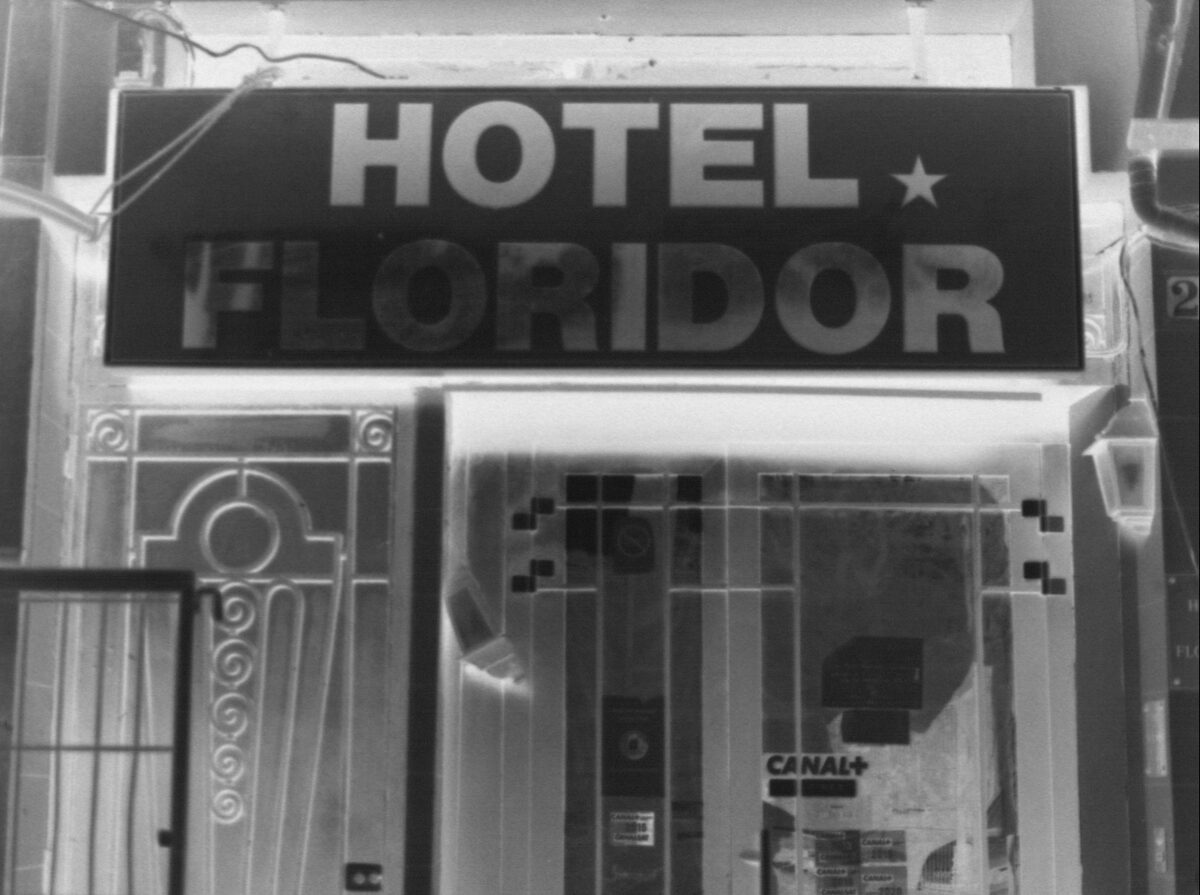
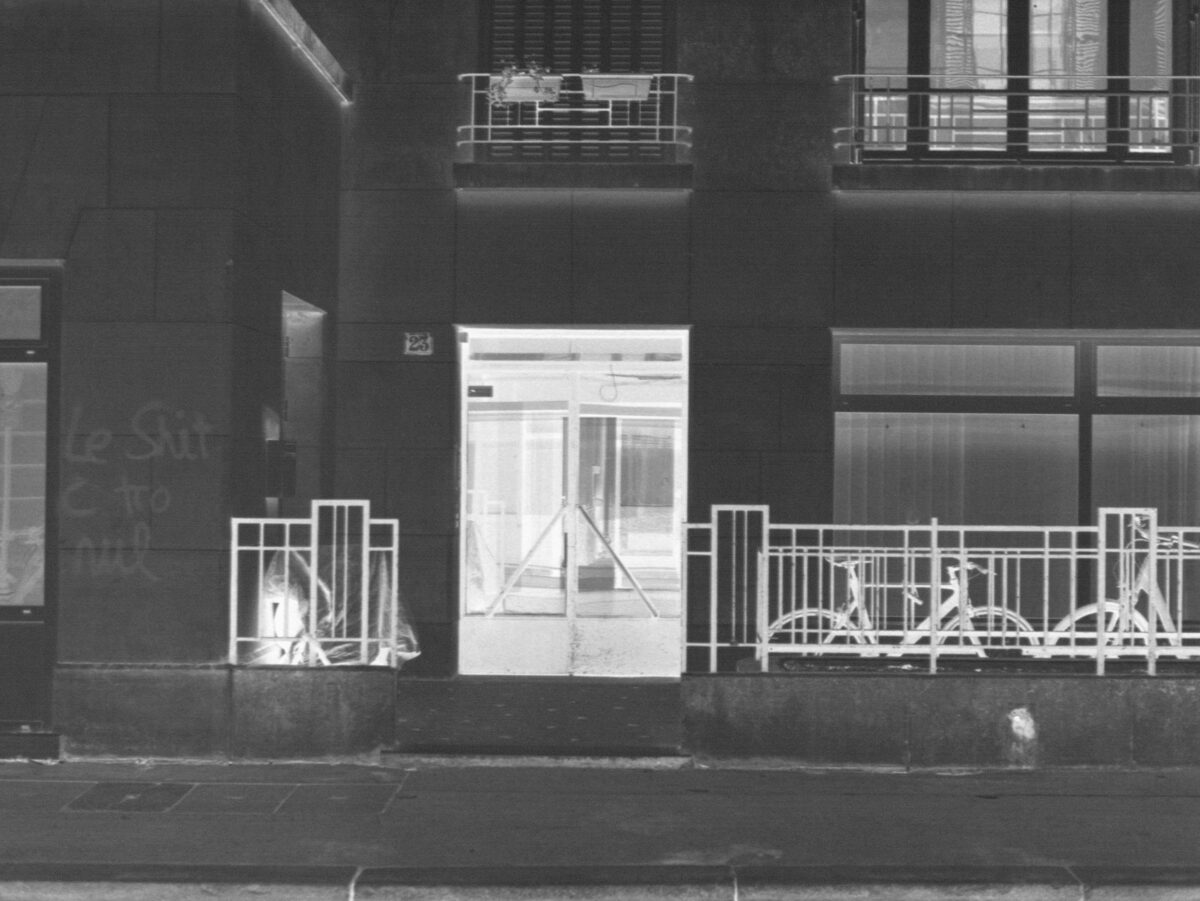
THE SHADOWS OF BRÂNCUȘI
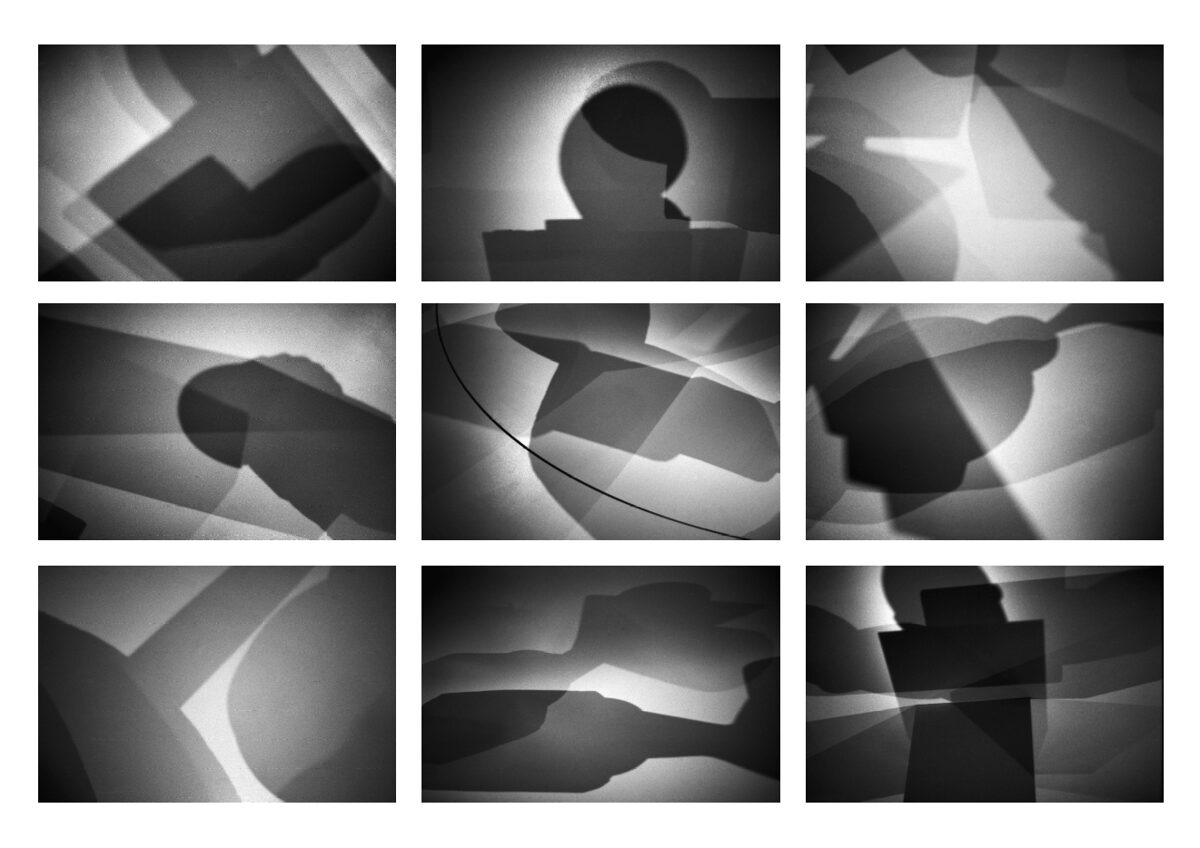
Aleksandra Kolodziejczyk and Karl Wratschko, 2024
Series of 9 silver gelatine prints
How
does the shadow relate to the sculpture? It is outside the artwork and
yet connected to it. Depending on the composition of the sculptures, the
lighting conditions and the background, the shadows change shape,
become more or less visible, overlap and create different shades of
grey. In this way, the sculptures are abstracted to their basic form and
given a form of expression that is changeable and therefore ephemeral
in comparison to the materiality of the objects that cast the shadows.
Can we look at the shadows separately from the artworks? Do they open up
a new aesthetic of reception? Does the artistic character of the
objects remain recognisable in them, and do authors' rights also apply
to the shadows of artistic works?
The analogue photographs were
taken in 2024 during an exhibition on the work of the sculptor
Constantin Brâncuși (1876-1957) at the Centre Pompidou in Paris.
Photographic series of 11 slides (b/w), 2024
THE FUTURE IS PRESENT (Vienna)
Selection of photograhic works presented in the exhibition 'The Future is present', "Rotlicht - Festival für analoge Fotografie" (OpenCave), 24th of November until 1st of December 2023 (all works by Aleksandra Kolodziejczyk and Karl Wratschko)
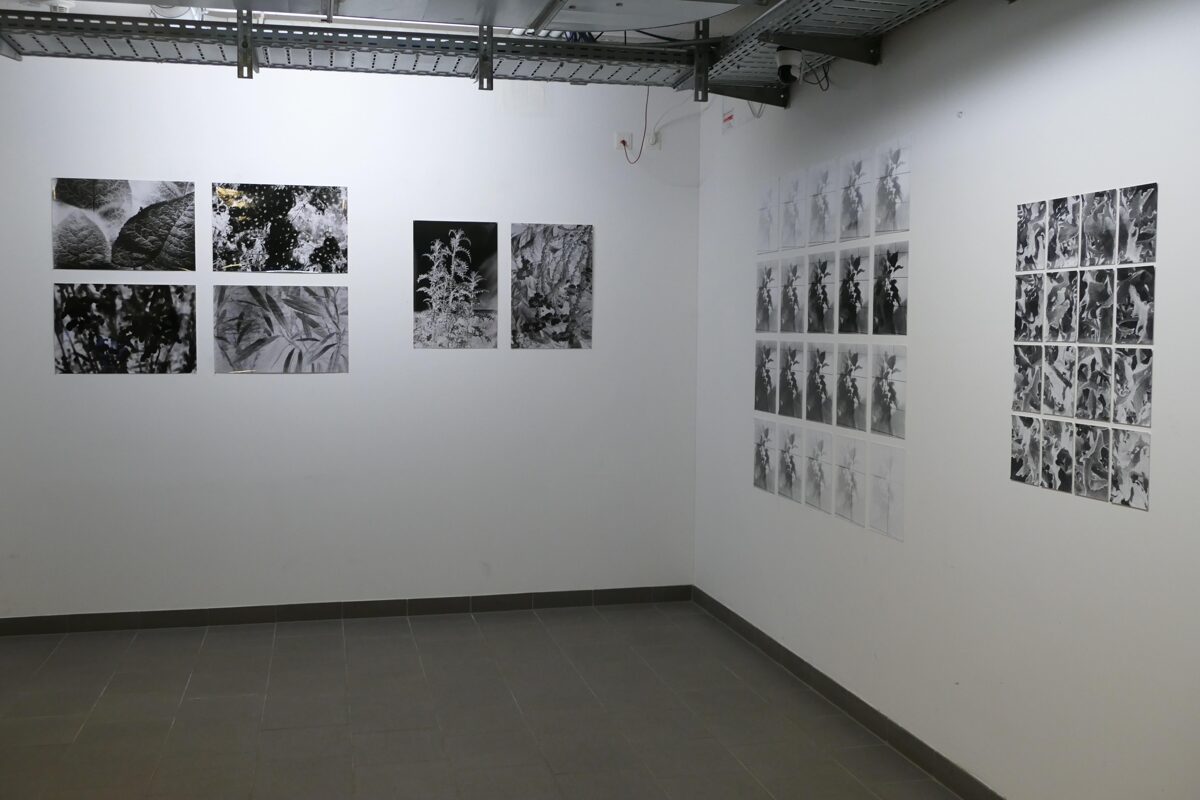
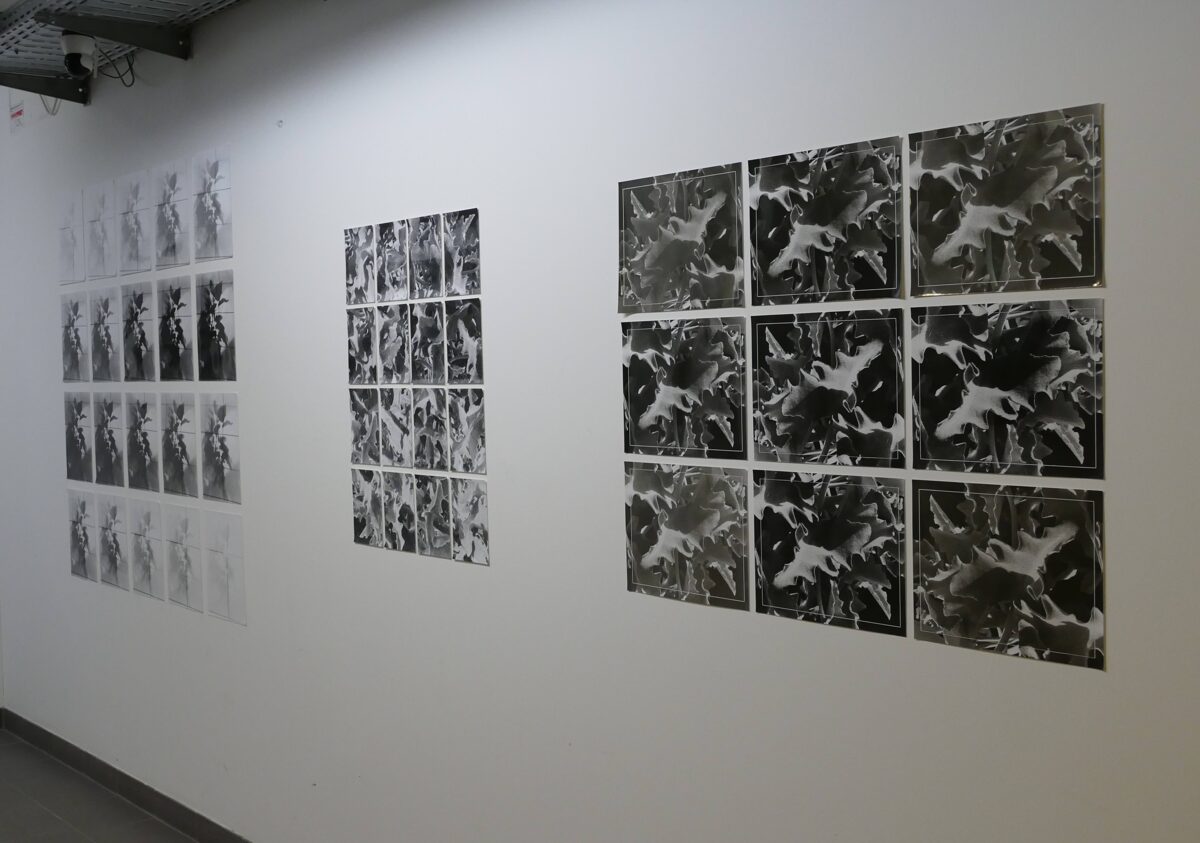 Exhibition photos: Aleksandra Kolodziejczyk
THE FUTURE IS PRESENT (TIRANA)
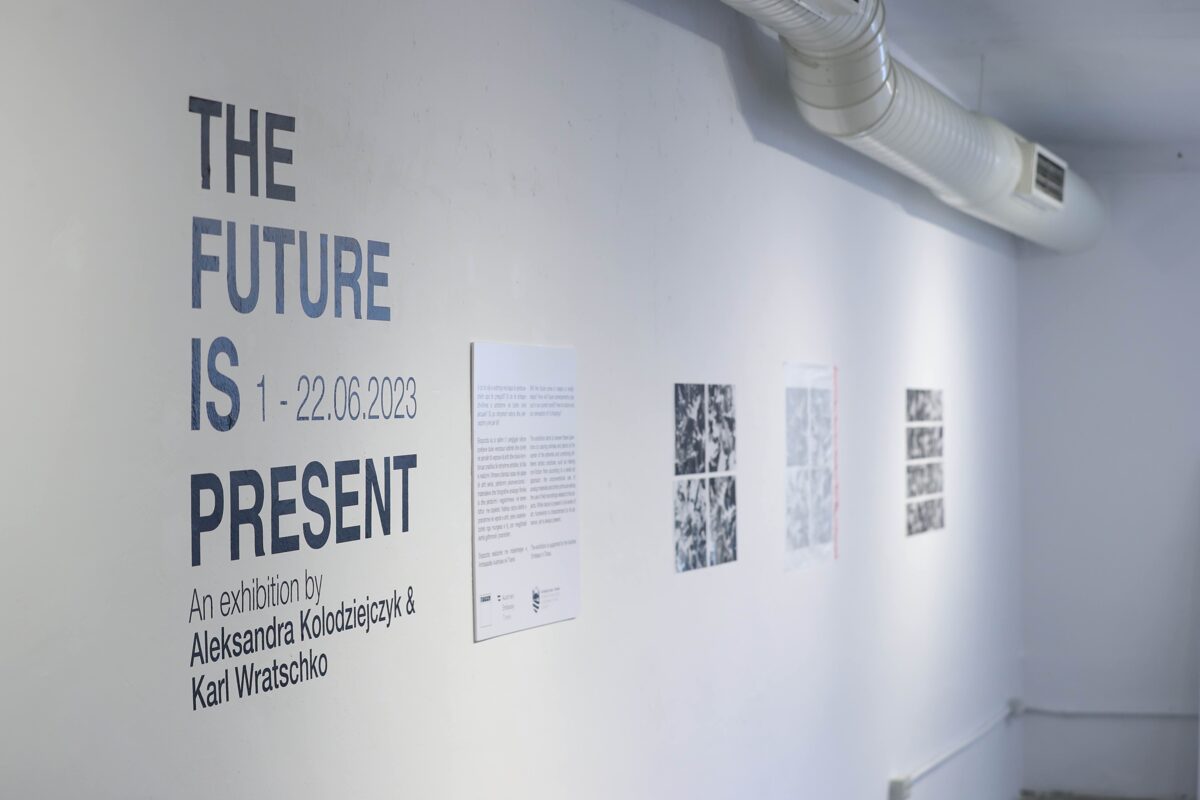
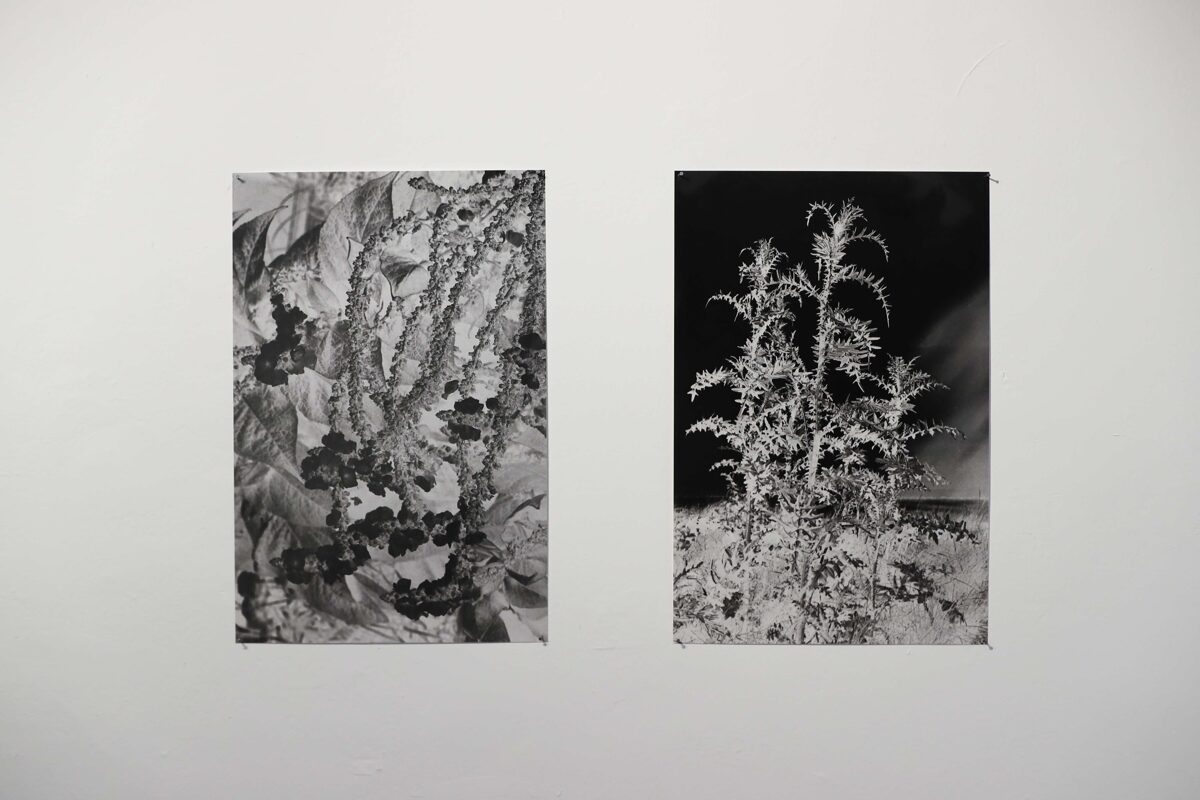
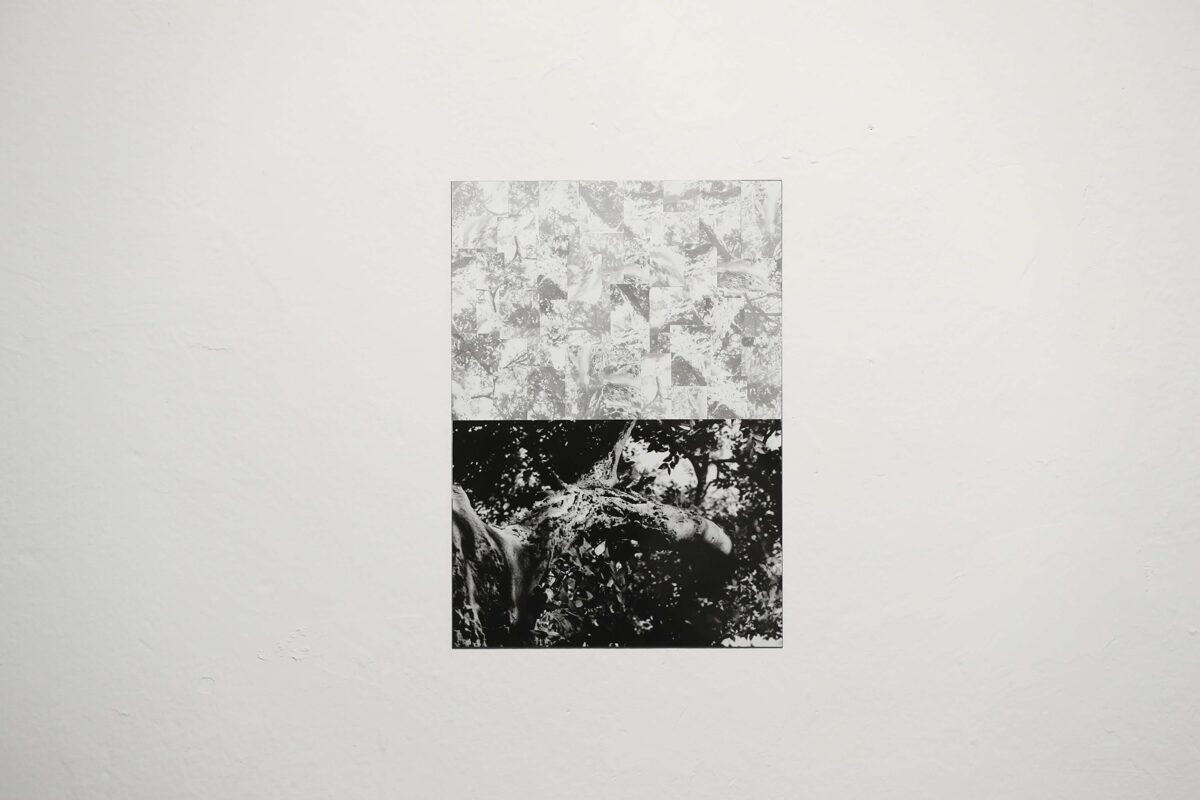
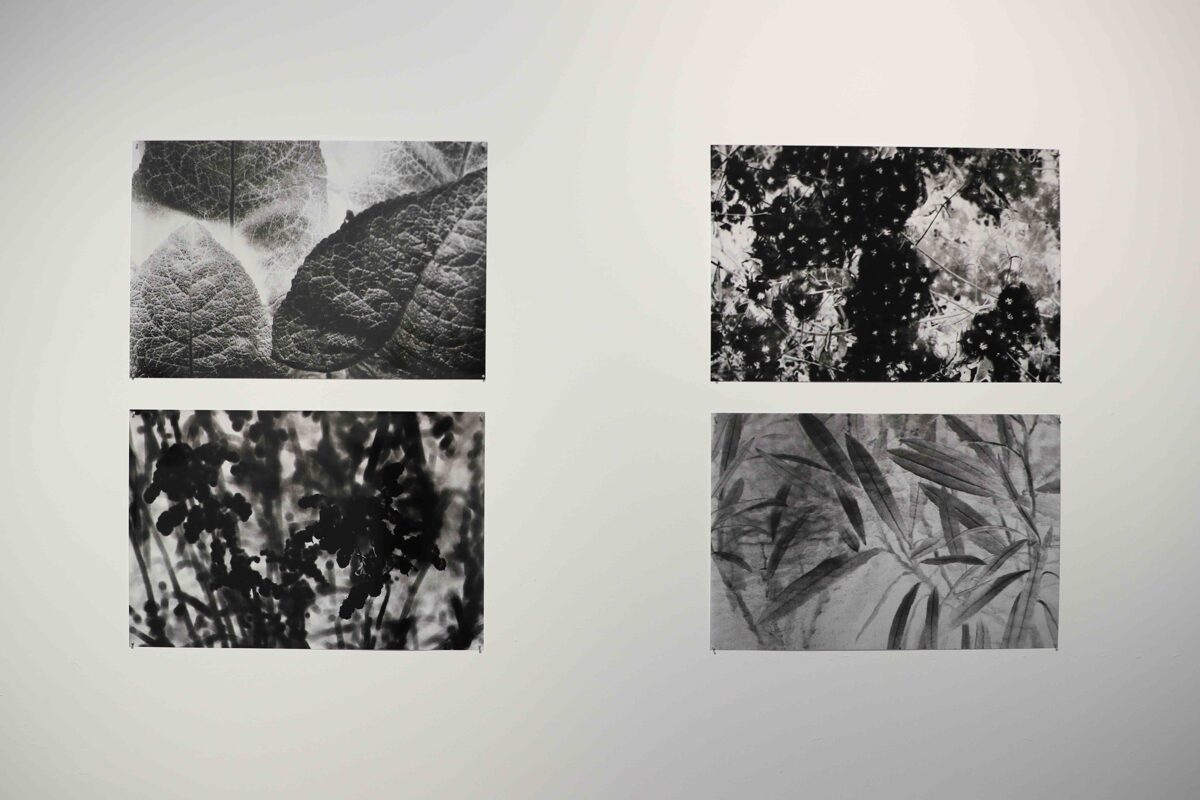
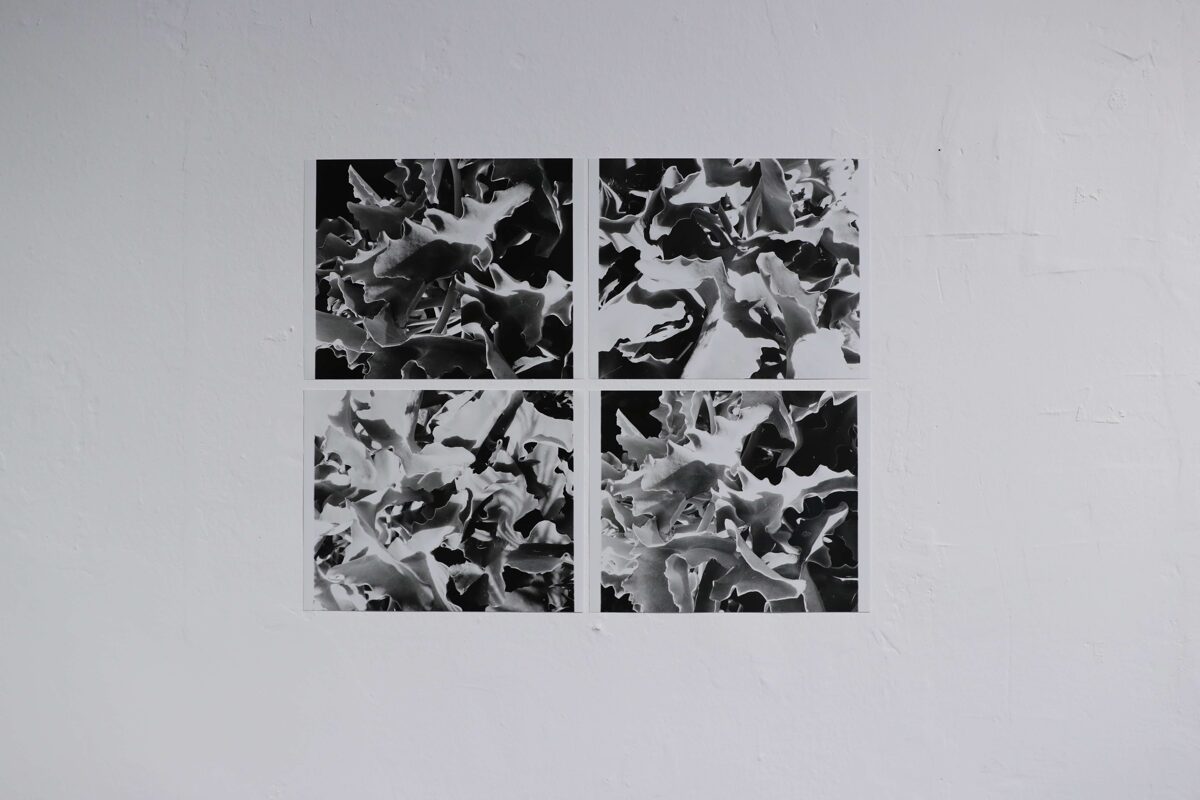
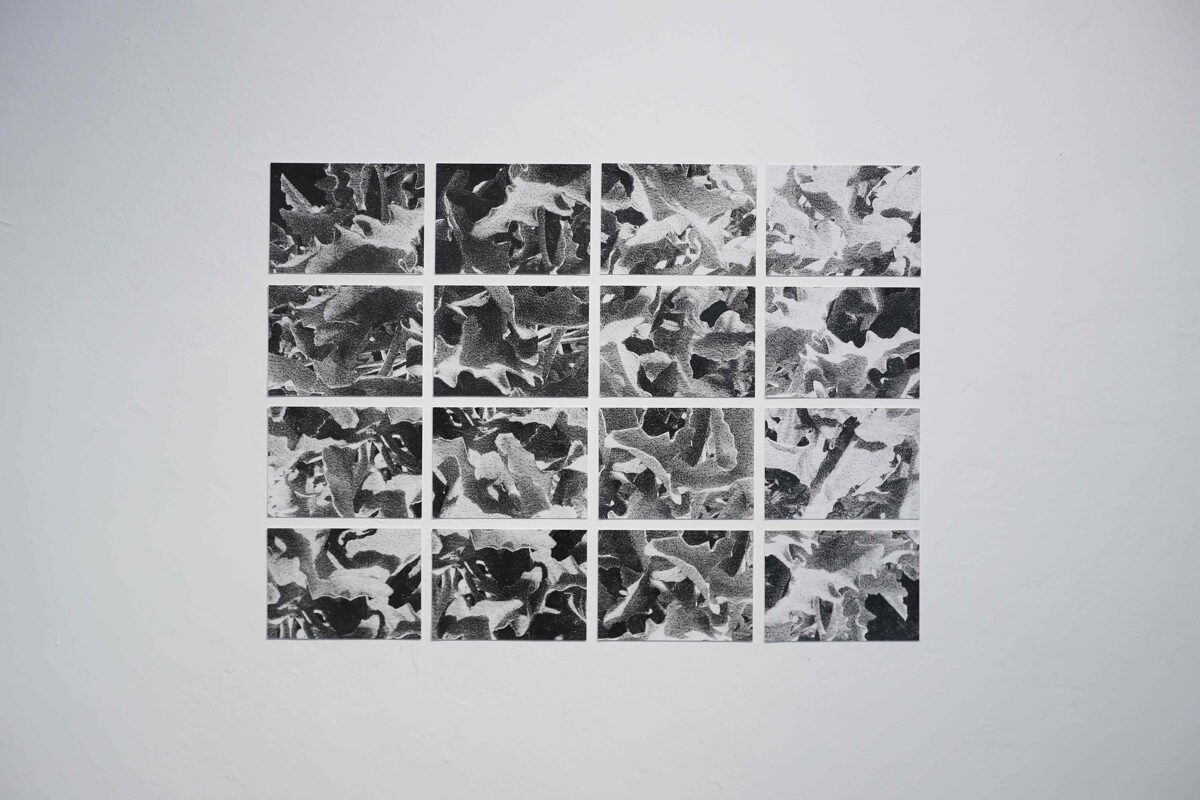
Exhibition photos: Tulla Cultural Center, Tirana
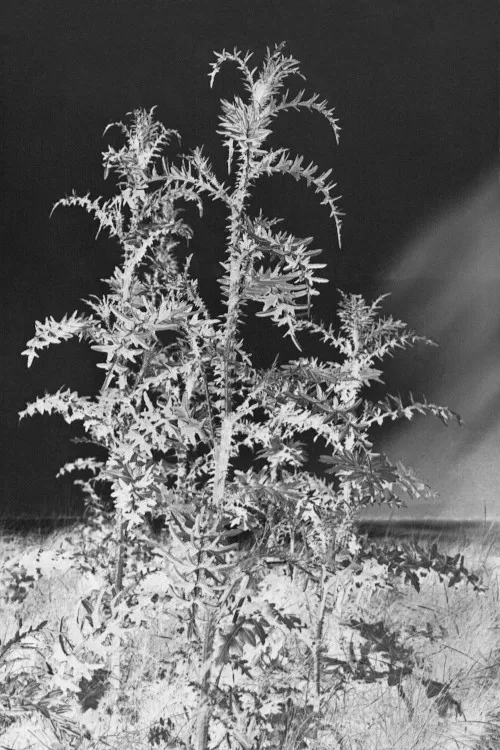
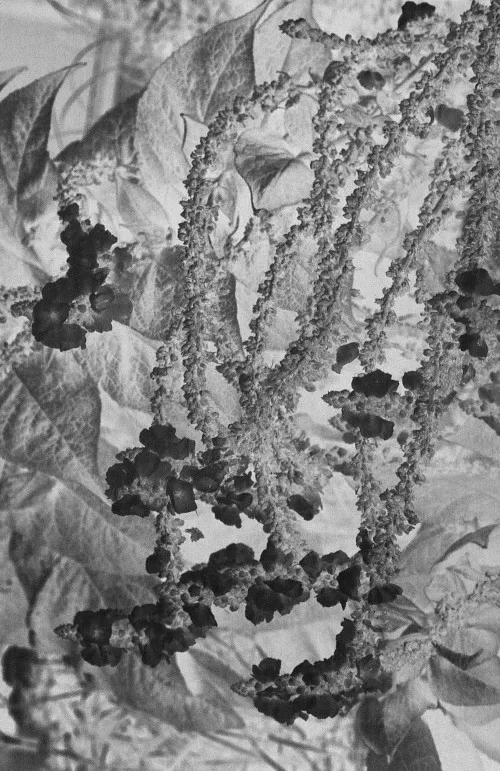
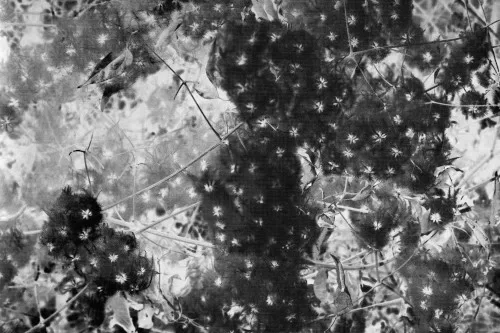
1+1
Series of 2 silver gelatin prints, 2023
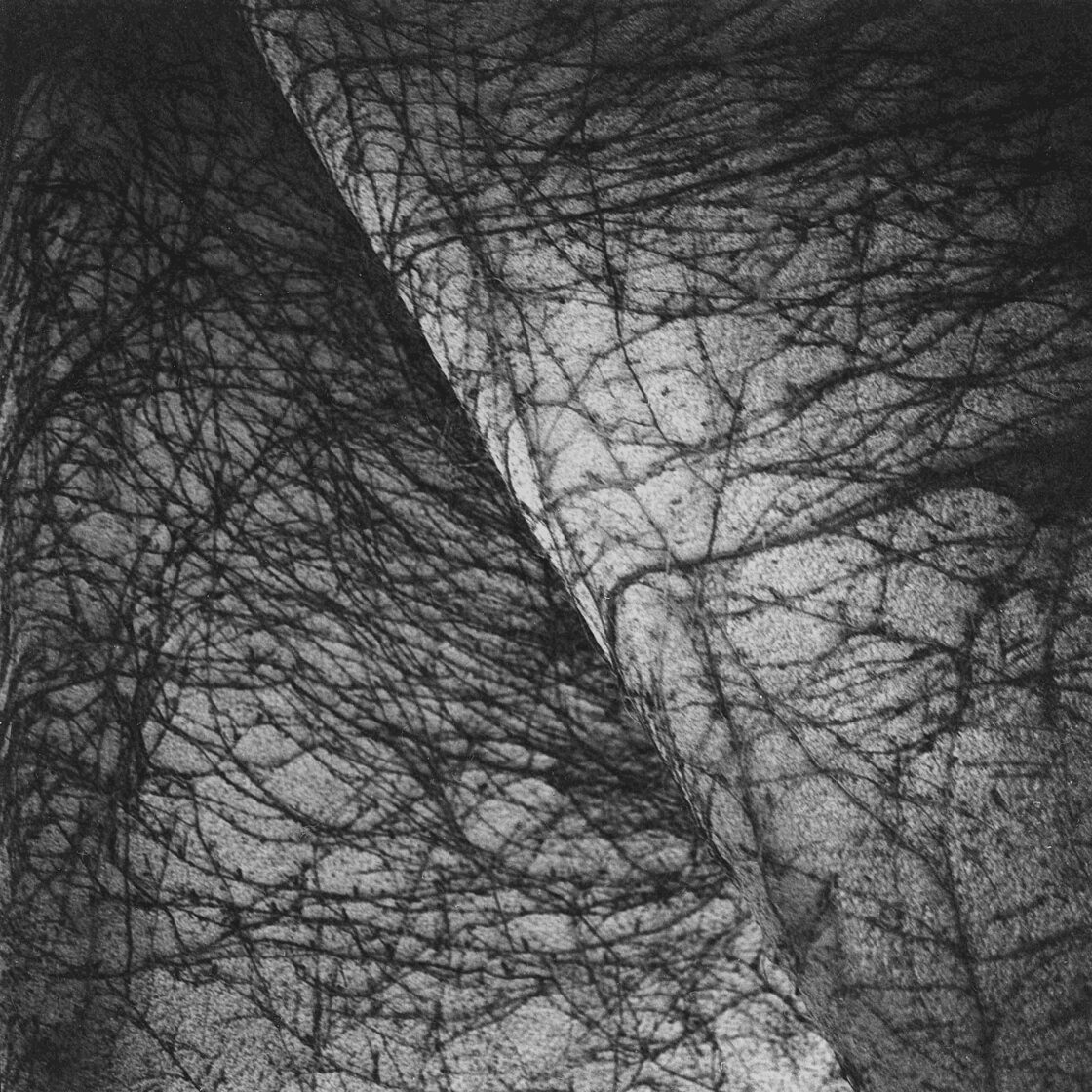
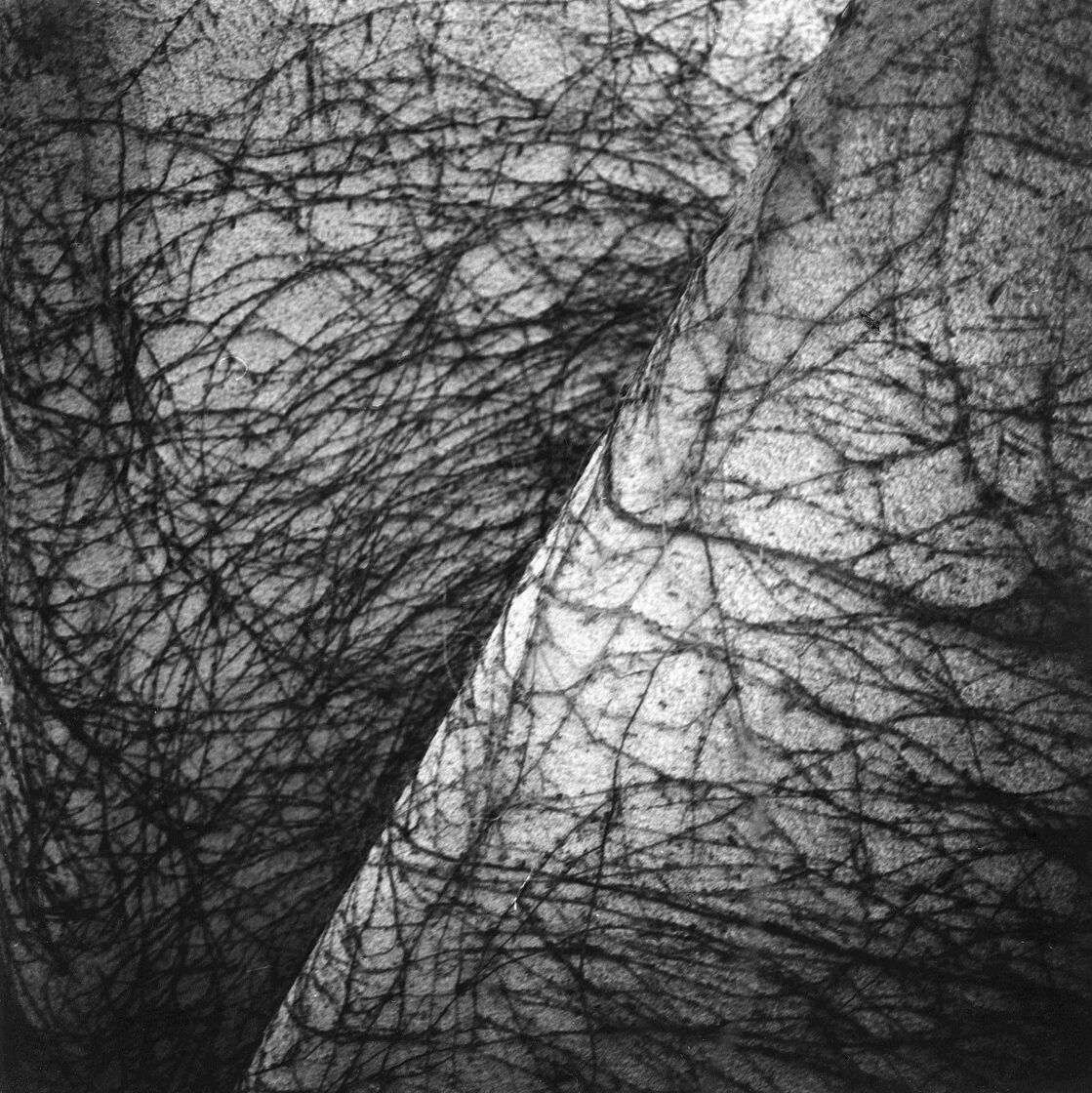
closer
Aleksandra Kolodziejczyk & Karl Wratschko, 2023
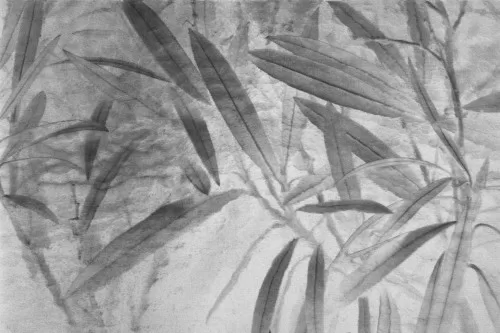
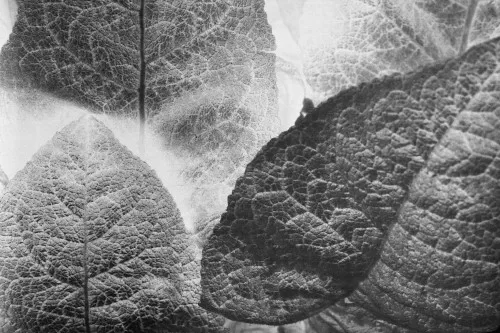
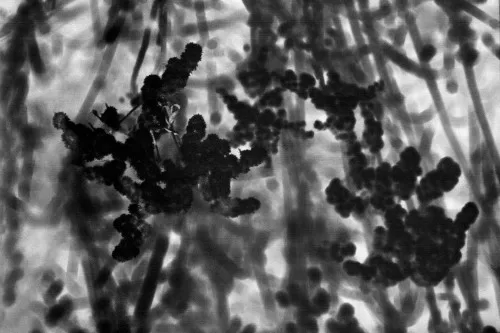
ARCHITECTURE & IMAGINATION
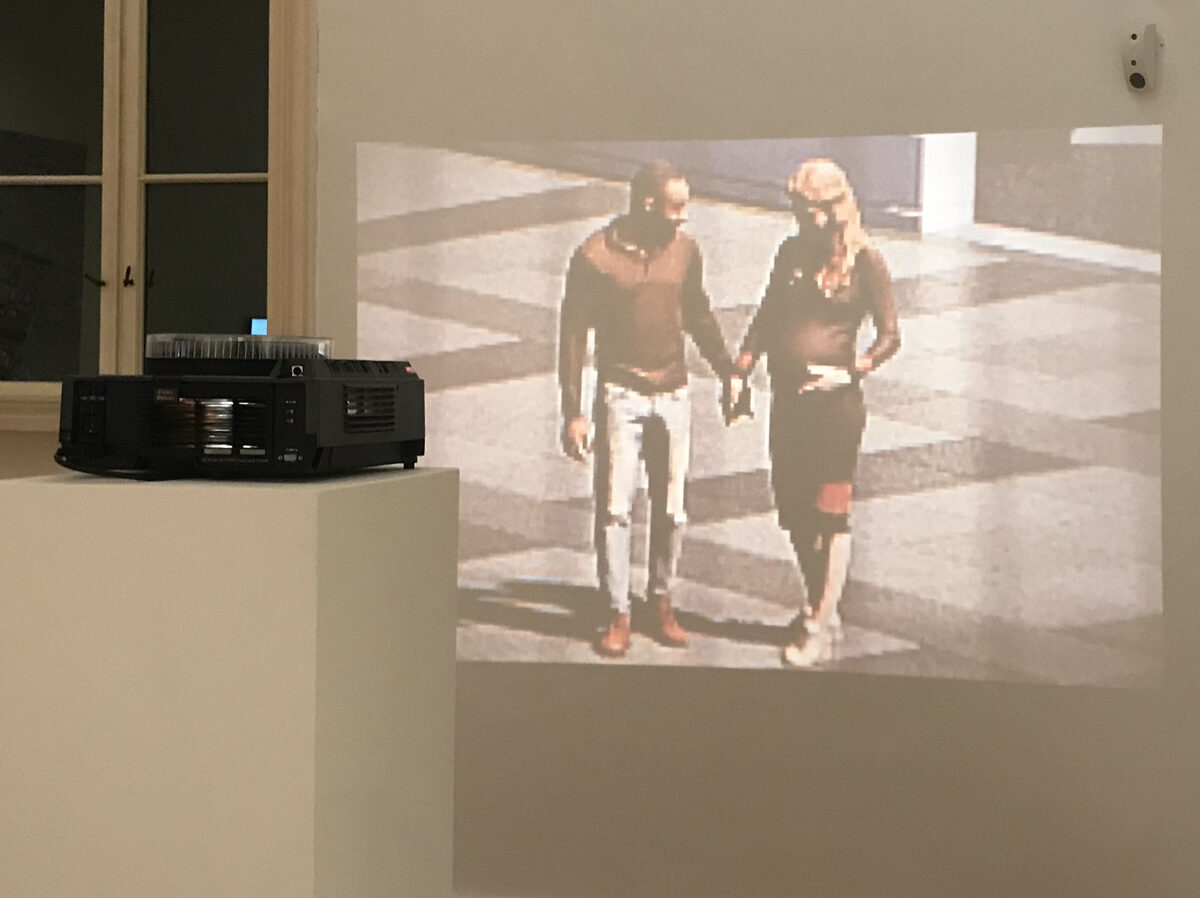
Series of 27 slides, 2022
All images shown here were taken in Jerusalem in summer 2022.
AT THE SHORE
Series
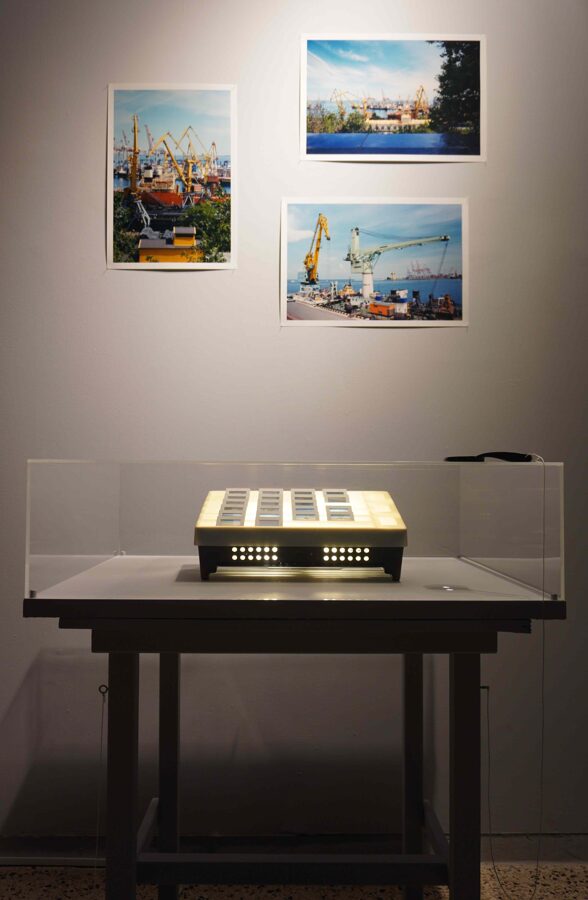
of 21 slides presented on a viewing table plus
three C-prints.
Realised
in
2022 together with Aleksandra Kolodziejczyk.
SYNTHESIS |
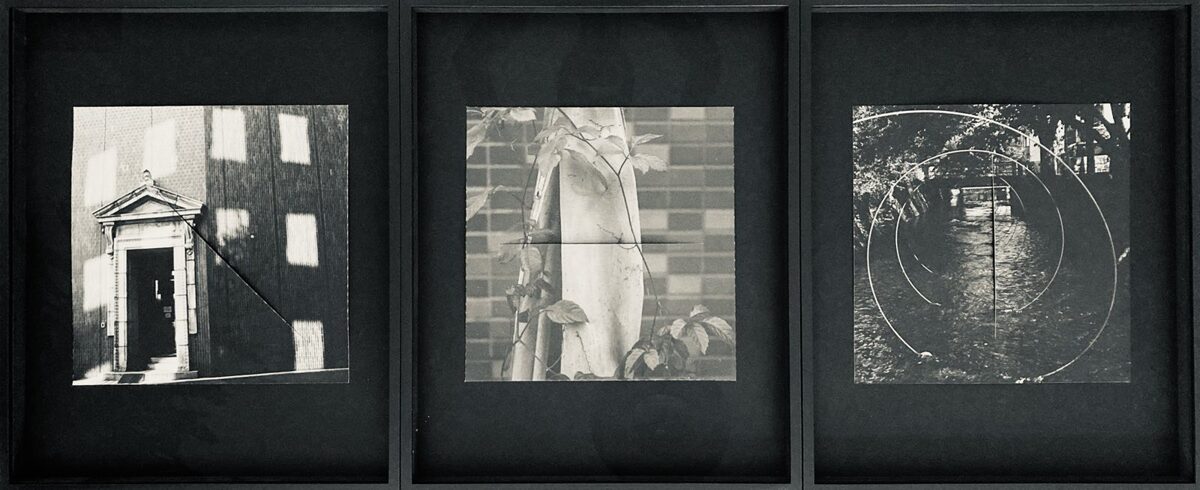
Series of three photos, 108cm x 45cm, gelatin silver print on paper, 2022
The work deals with the fascination of the fusion of, at first glace, opposite things. Is it really that difficult to reconcile opposites, or does the separation mainly happen in our heads?
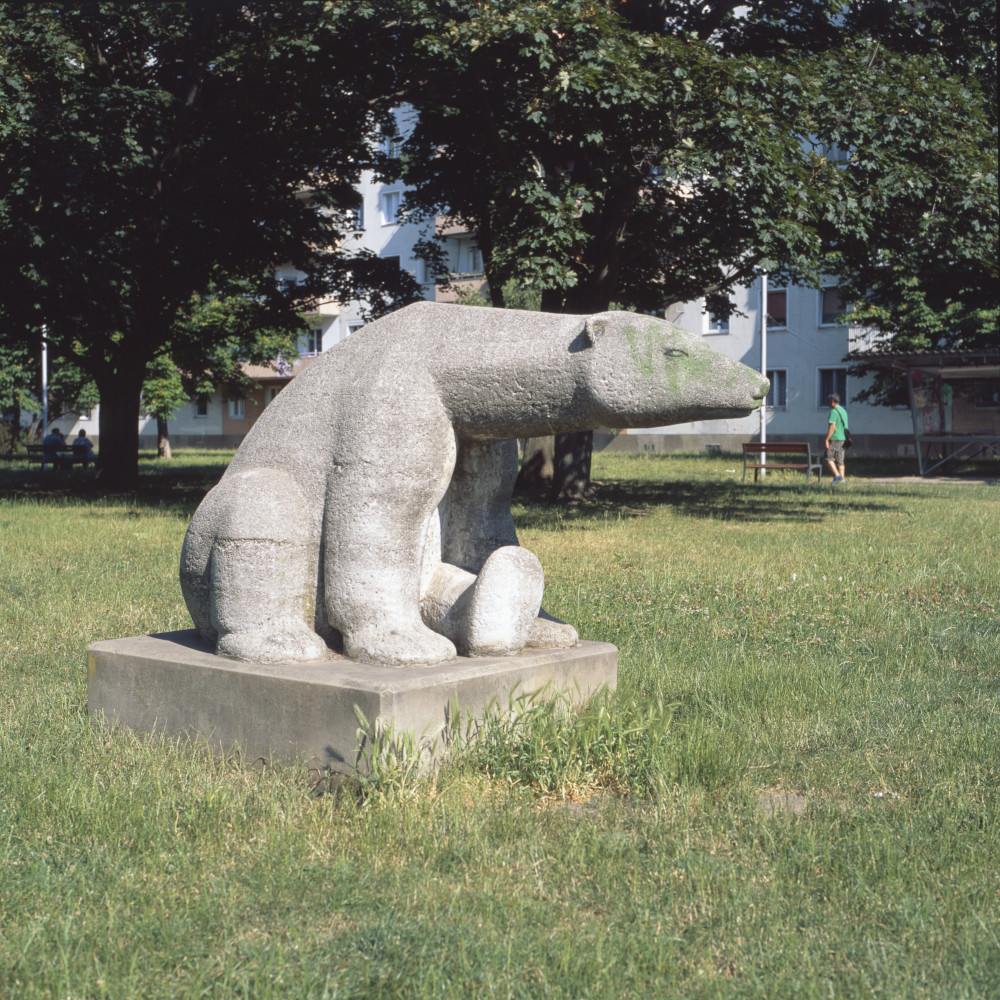
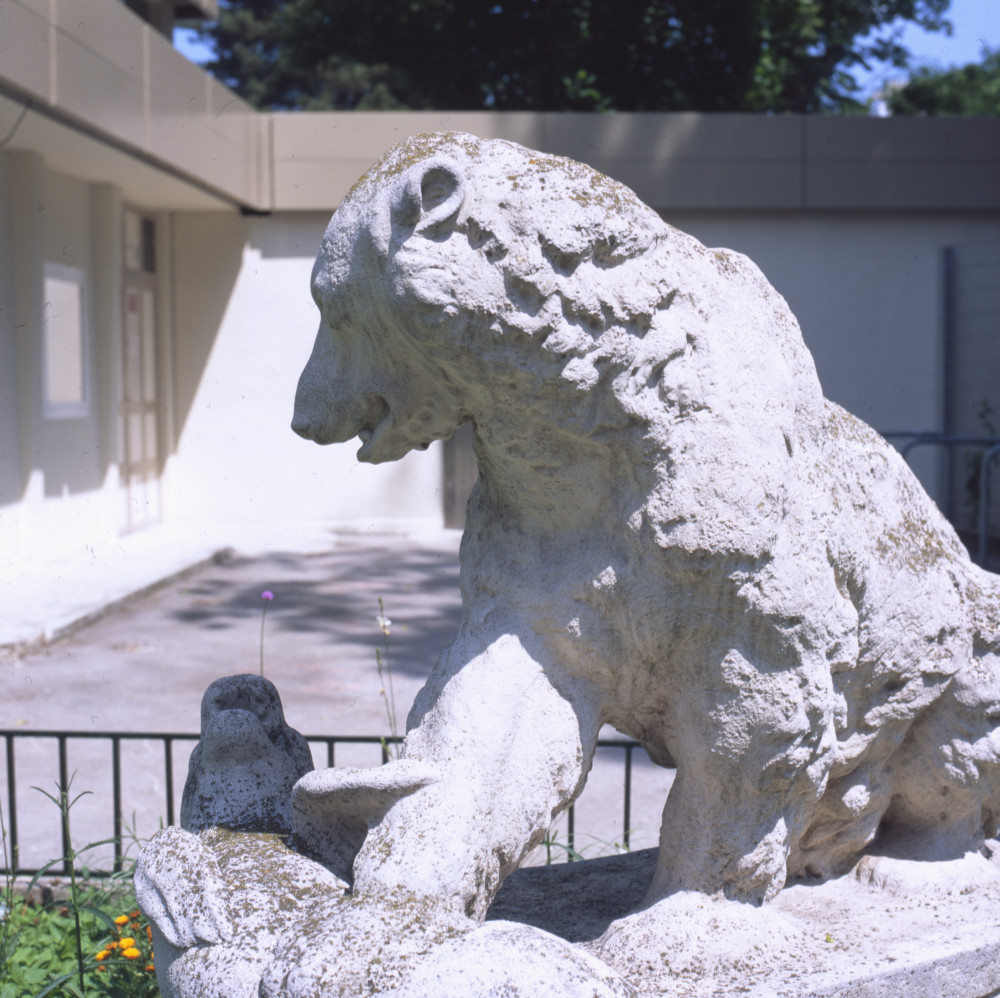
Series of 9 medium format colour slides.
Aleksandra Kolodziejczyk & Karl Wratschko
2021
MISSING
Photo-performance together with
God’s Entertainment
In the framework of the opening of GGGNGM - Guggenheim in Floridsdorf? on September 17, 2020 at Am Spitz in Vienna
SYNOPSIS:
Remembering is inconceivable without the act of fixation. Much is spontaneously inscribed into the individual or collective memory, but some things require the conscious act of fixation. In photography, fixation is a deliberate step taken to record an event that has just been exposed for the future. Without it, we can literally watch forgetting take place.
Countless
people and their (hi)stories disappeared in Vienna in the 20th
century. The photographic installation MISSING enabled the
audience to bear witness to disappearance on the one hand, and
remembering on the other.
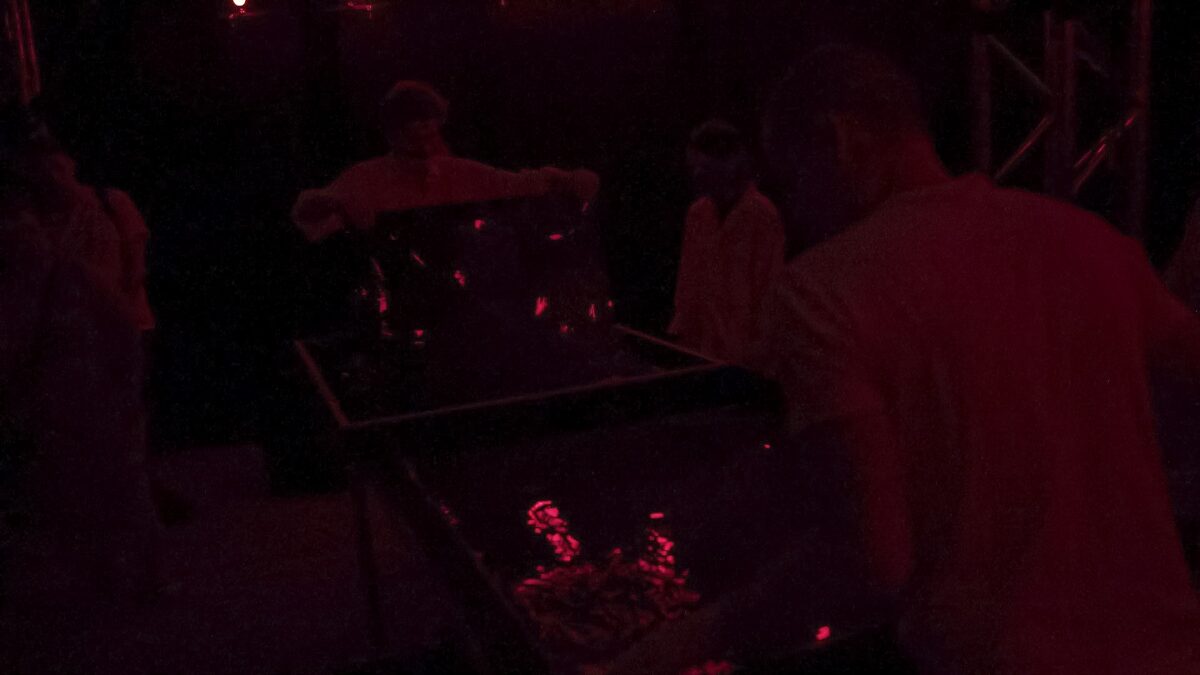
16 portraits of people from the
Floridsdorf district of Vienna who were killed by National Socialists
during the Second World War were exposed in advance on large-format
photo paper. The images were then developed in front of the audience
in a bath and hung in a red-lit room. After a while, the lights in
the room were turned on and the audience could watch as the images
slowly blackened and eventually (almost) disappeared altogether. To
complement the performative photographic work, a book containing the
biographies of the 16 portrayed people was exhibited.
Inspired by Ulay's Fototot.
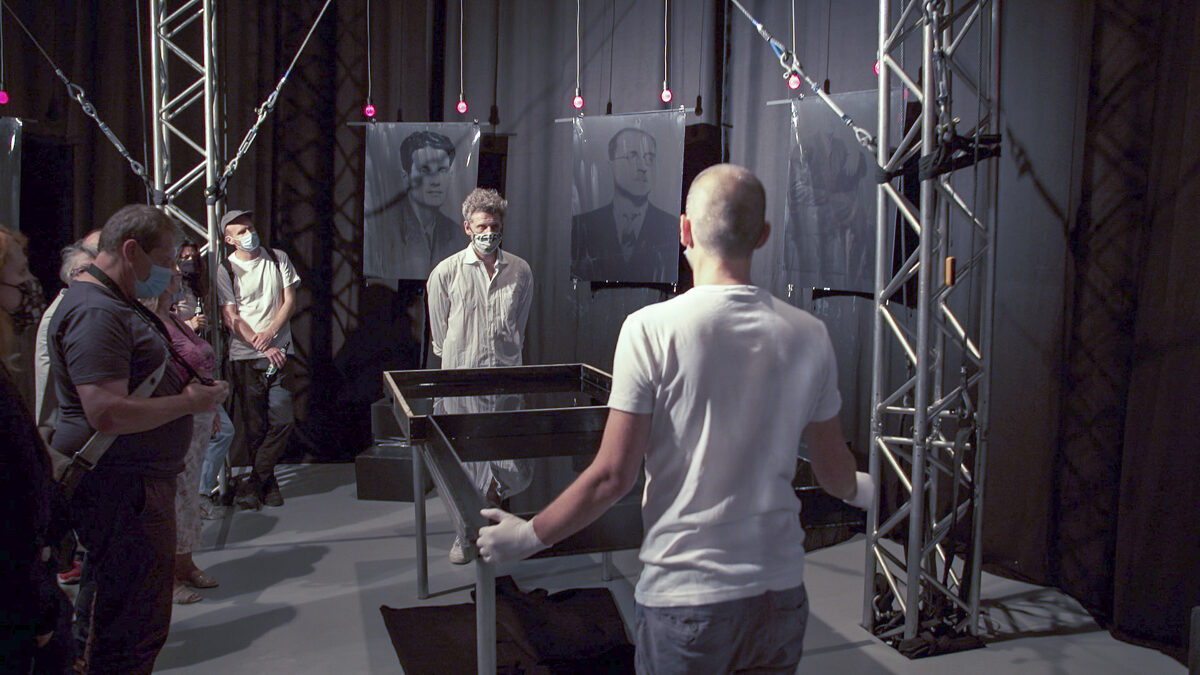
Photos: Andreas .muk. Haider
HYPOTHESIS AND INTERPRETATIONS
Exhibition, on view from April 4, 2020 to April 17, 2020 at the Zeta Art Center & Gallery, Tirana, Albania
The exhibition showed works created during my artist residency in September and October 2018 as well as works influenced by this stay. The artistic works deal with topics of migration and memory.
With the support of the Austrian Embassy in Tirana, T.I.C.A., the Regional Government of Styria - A9 Culture, Europe and Foreign Relations, the European Cultural Foundation, and Compagnia di San Paolo.
I. Prologue
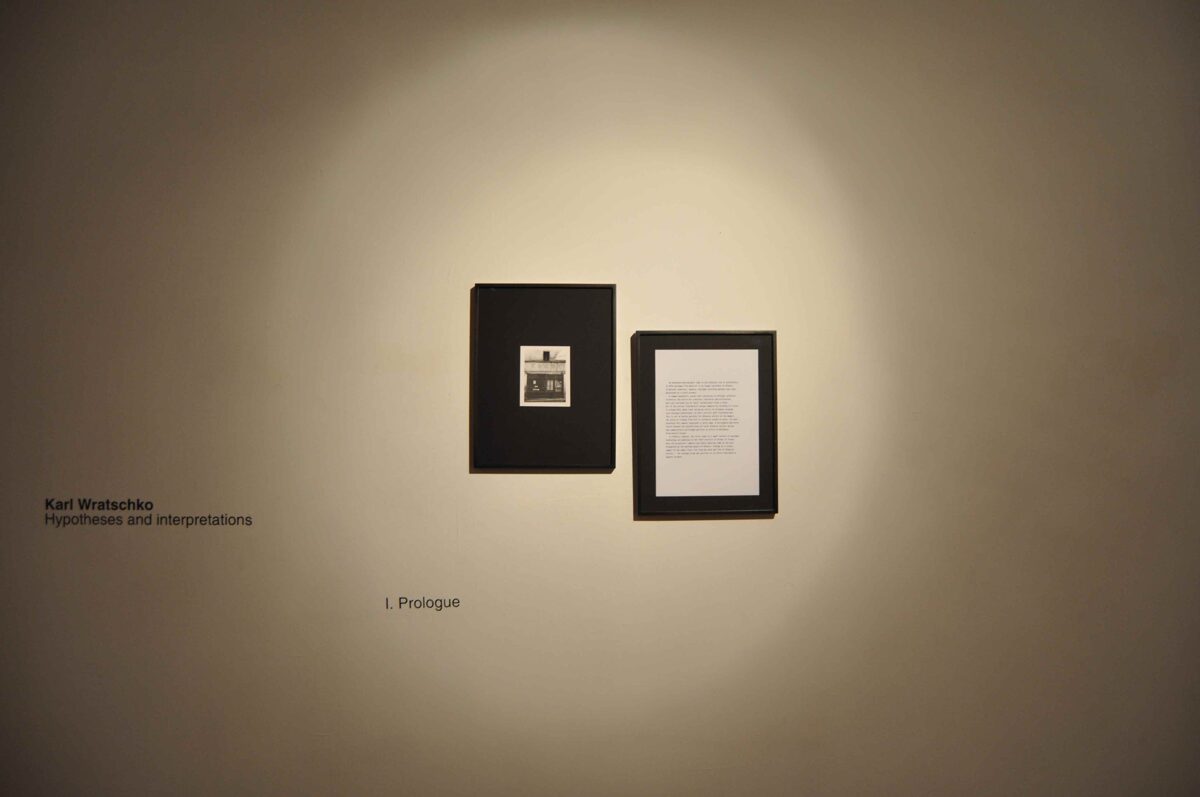
Silver gelatine print + A4-sheet with text
2018
II. mare liberum | mare clausum
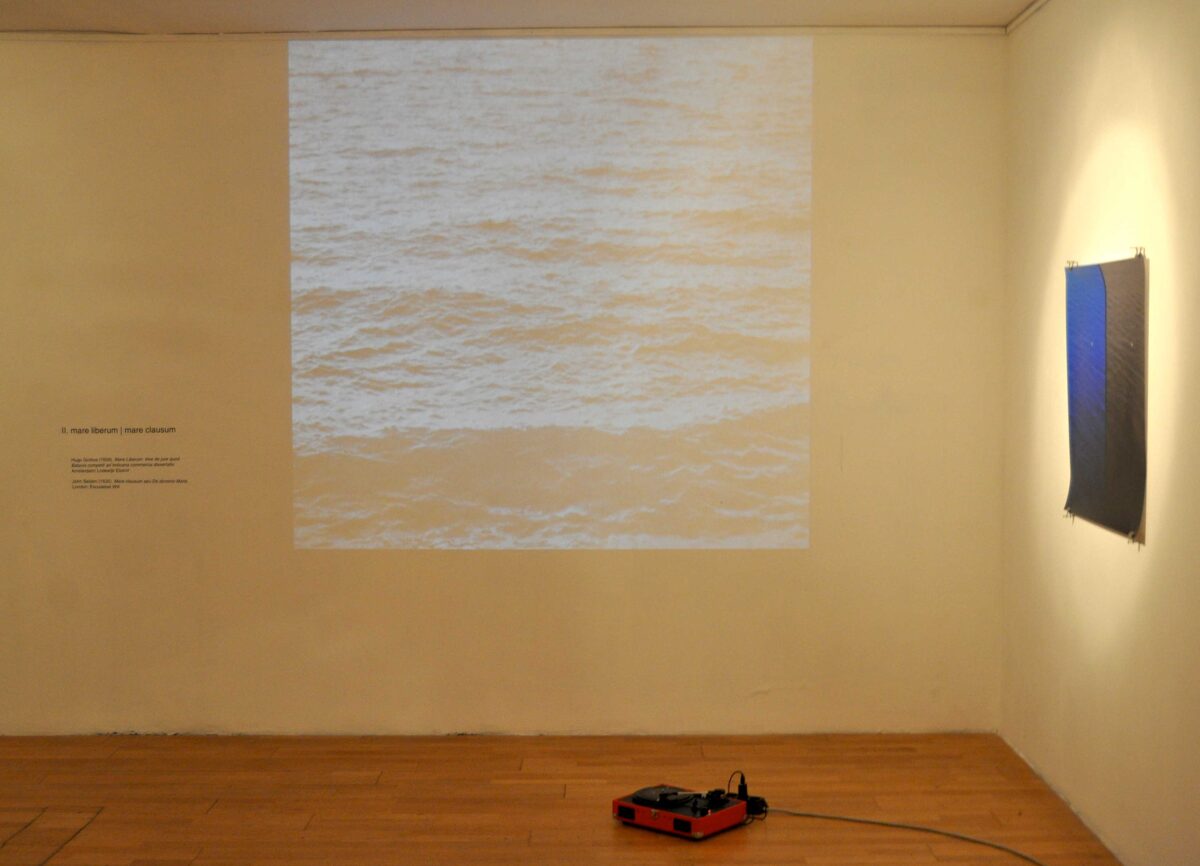
Film: mare liberum | mare clausum
16mm/digital, 2 minutes 40 seconds + Portable record player + 7”
with locked groove
2019
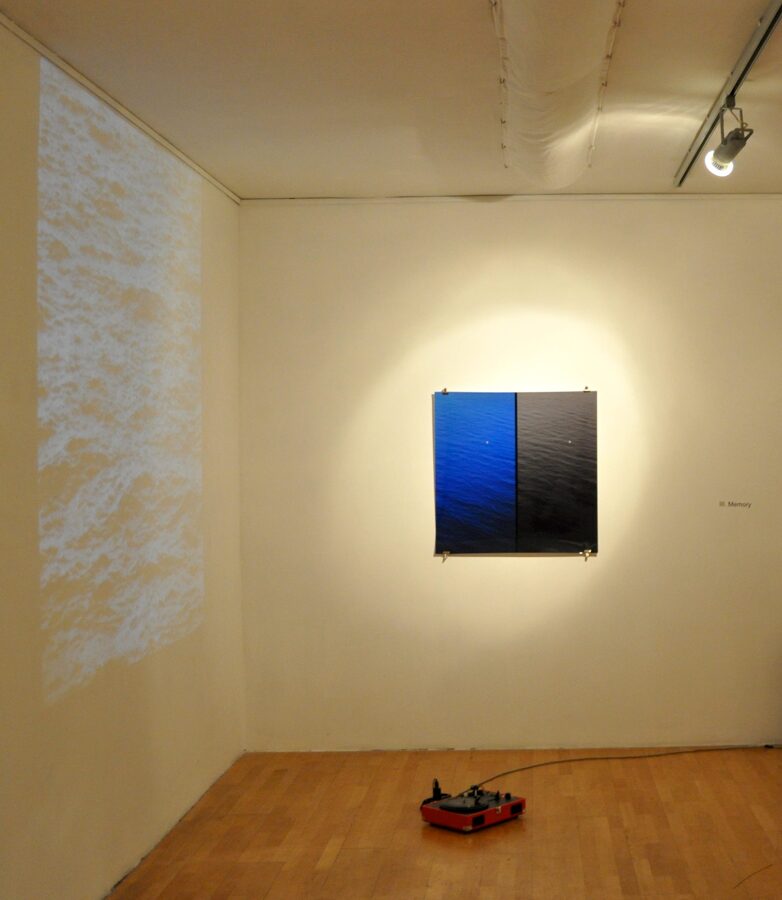
Photo: mare liberum | mare clausum
C-Print, colour/b&w
2019
III. Memory
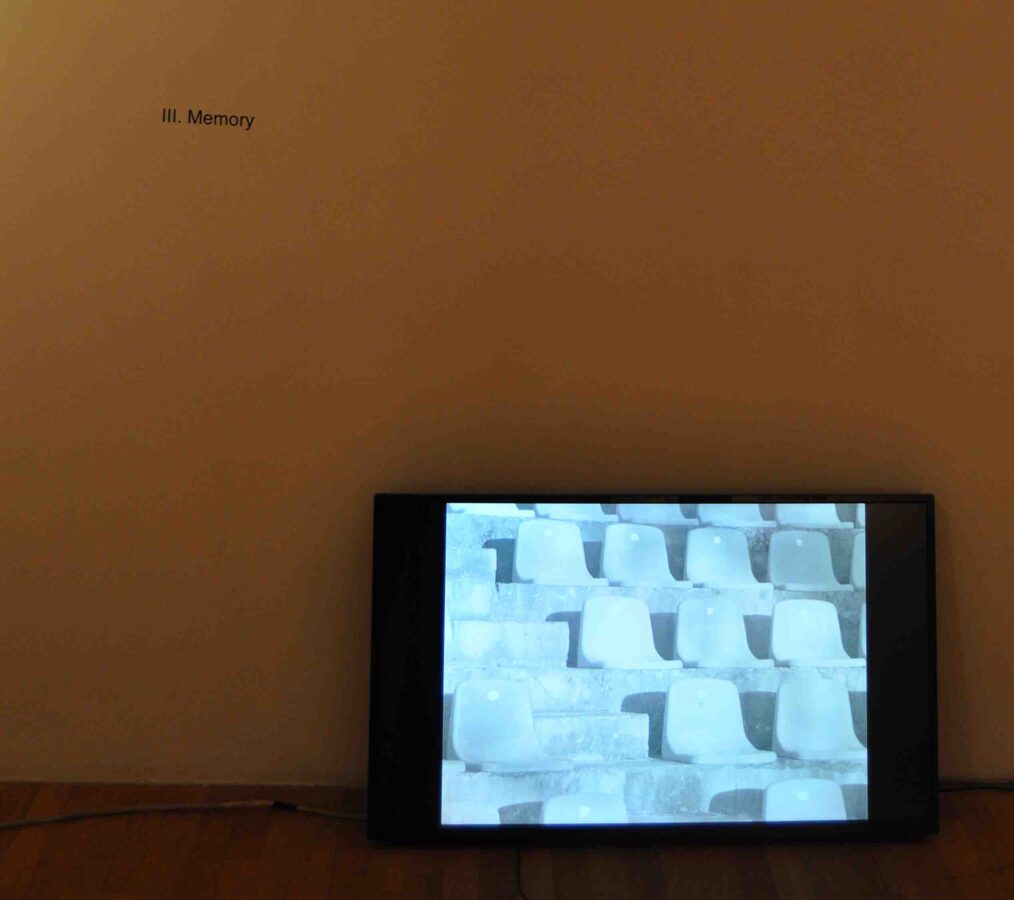
Film: untitled
1x loop on a TV-screen with sound
16mm/digital, 2 minutes 40 seconds
2019
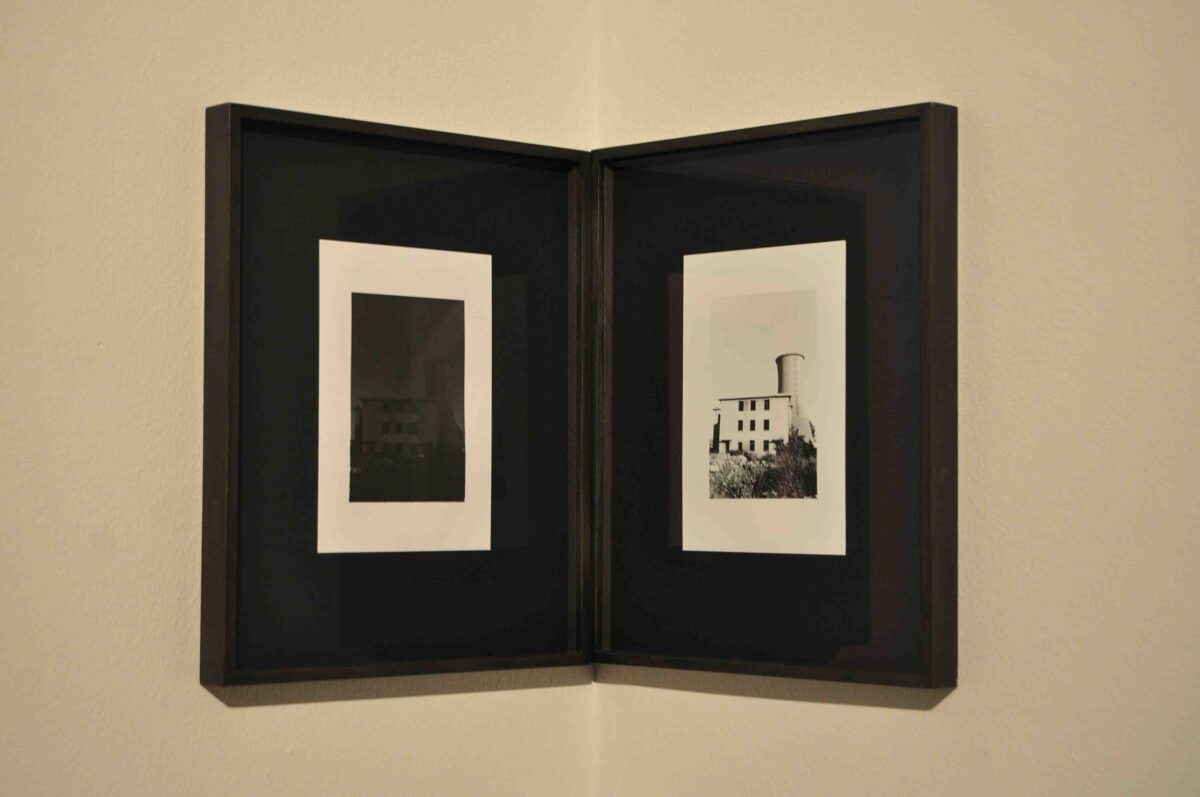
2x Silver gelatine prints
2018